The Tour du Mont Blanc is not a cheap hike. That's the honest answer, and you deserve to hear it upfront before you start planning. Laura and I hiked the full route in 2025, mixing mountain huts, campsites, a few nights of bivouacking, and one proper hotel stay. For food, we tried a bit of everything too, cooking our own meals, eating half board at the refuges, stopping at local restaurants in the valley towns, and picking up supplies at markets and supermarkets along the way. In this post we share what each option actually costs, what worked for us, and our best tips for keeping the budget under control without ruining the experience.
Laura had done the TMB before, back in 2018, and the price difference seven years later was striking. Prices on the TMB have been rising steadily. What you paid even a few years ago is simply not what you'll pay now, so we decided to bring some updated prices for you.
The Short Answer: What Does the TMB Cost in 2026?
Depending on how you hike it, here's a rough total for a 10–11 day self-guided circuit:
- Budget (camping + self-catering): €400–€600 per person
- Mid-range (dorm huts + half board): €700–€900 per person
- Comfort (private rooms + hotels): €1,200–€2,000 per person
These numbers cover accommodation, food on the trail, and local transport. They do not include flights or train to the Alps, gear, or travel insurance.
Accommodation: the biggest cost on the trail
Accommodation will be your largest single expense, and the range is wide depending on how you sleep.
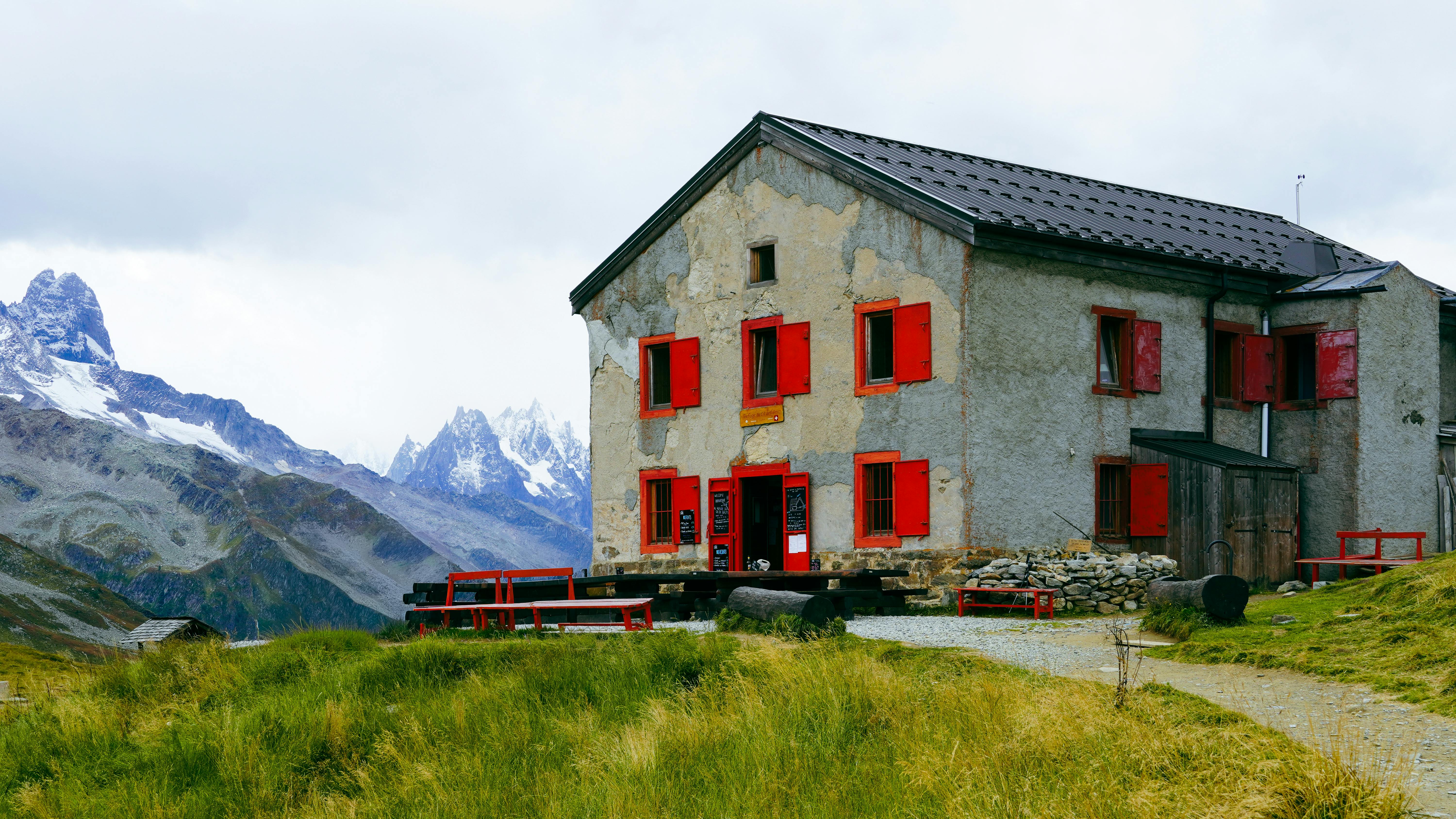
Refuges and mountain huts (half board) are the most common option. Half board means you get dinner, a bed, and breakfast, essentially everything except lunch. In 2026, expect to pay roughly €52–€80 per person per night in a dorm on the French and Italian sections. Rifugio Elena in Italy, for example, ran €70 in a dorm with half board. Nant Borrant in France was around €62. If you want a private room, add €15-€25 on top of that.
Switzerland is noticeably more expensive. Dorm half board in the Swiss section typically runs €80–€110 per person. We found Champex-Lac and La Fouly to be the pricier nights on our route. If you're on a tight budget, this is where it stings, and it's worth being mentally prepared for it rather than shocked mid-trail.
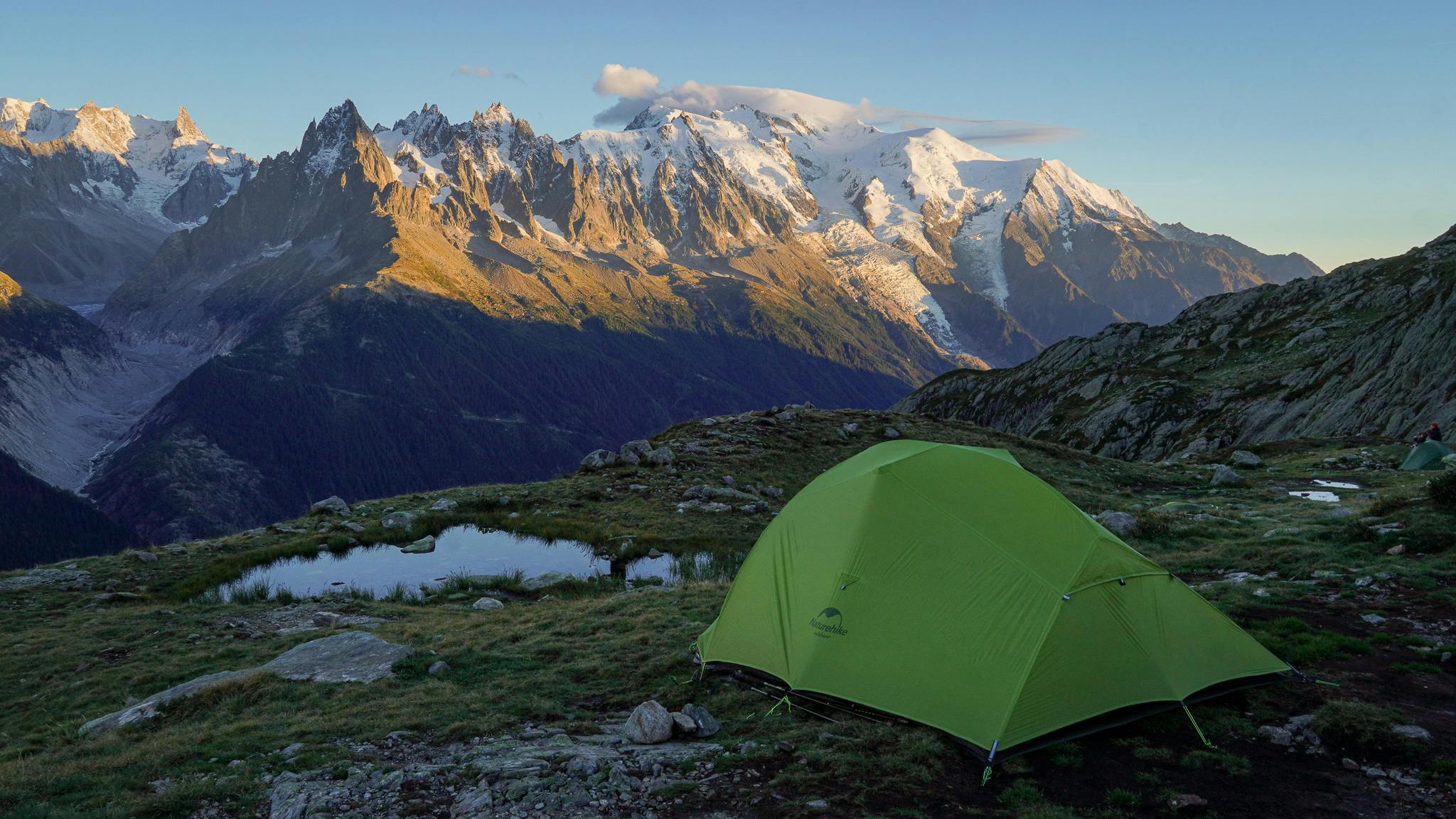
Camping is the cheapest option, especially if you include bivouacking in the legal spots. The rules vary a lot by country though. France is the most flexible, with plenty of campsites along the route and a few regulated bivouac areas on the higher sections. Italy is more restrictive: bivouac is only permitted above 2,500m, so your practical options come down to the campsites in Courmayeur and a couple of spots in Val Veny, which means spending those nights down in the valley. In Switzerland wild camping is not allowed, but there are official campsites at La Fouly, Champex-Lac, Trient, and Le Peuty that cover the Swiss section well. Campsite fees run roughly €8–€28 per person per night.
On our 2025 hike, we camped for most nights (a mix of campsites and bivouacs), stayed at huts on two nights, and one hotel in Courmayeur. That combination ended up being our favourite way to do it: the camping kept costs down and gave us the freedom to be outside, the hut nights to experience the alpine vibes, and the hotel night was genuinely needed by that point in the trip. The accommodation cost on our hike was €260 per person.
Food: what you'll actually spend on the trail
If you're on half board at the huts, dinner and breakfast are covered. That leaves lunch and snacks as your main food cost on hiking days.
The easiest option is a packed lunch ordered the evening before from the refuge, typically €10–€16. You get a sandwich, some fruit, cheese, maybe something sweet. Not exciting, but practical and filling.
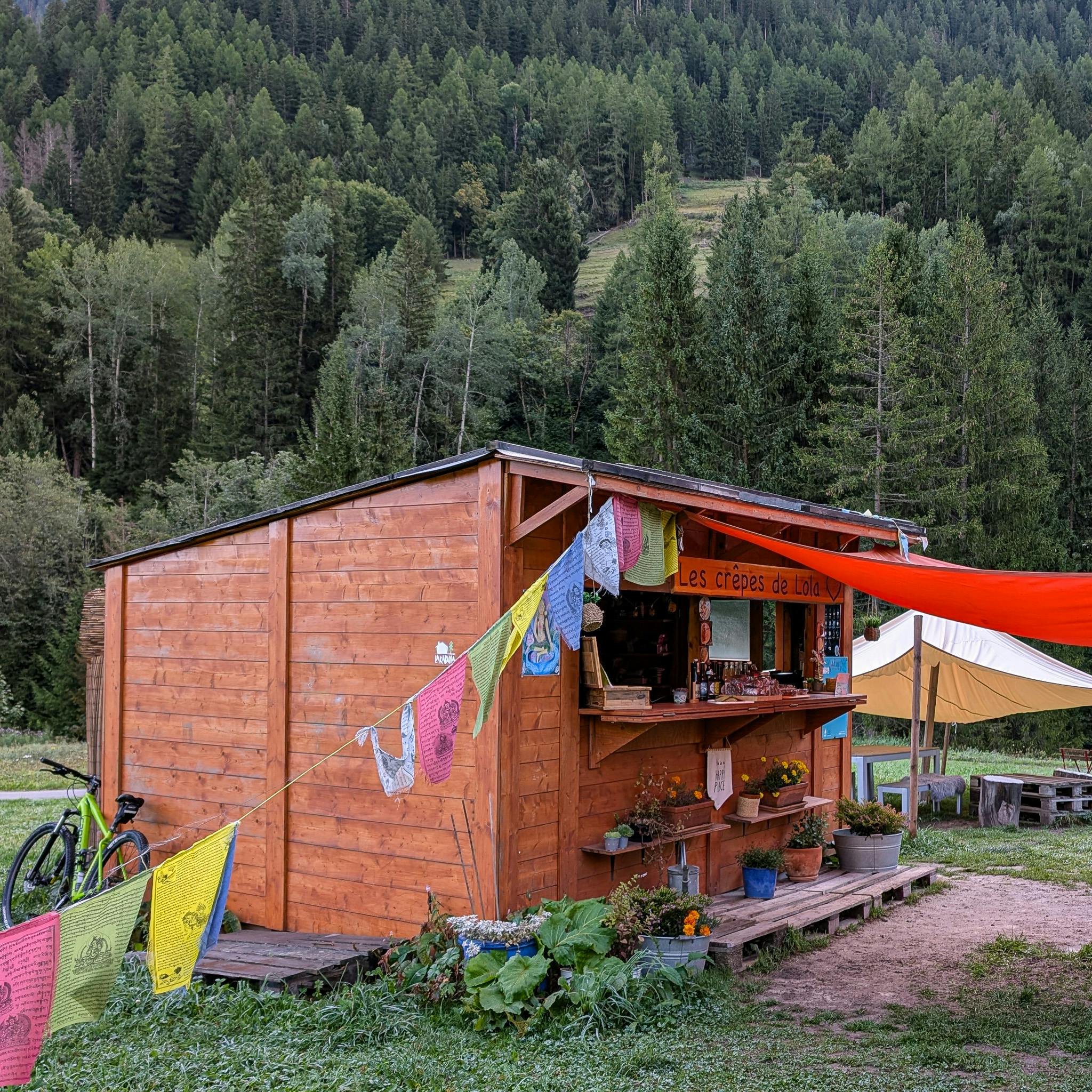
If you prefer to buy your own lunch, you can stock up in the valley towns. Les Contamines, Courmayeur, Champex-Lac all have small supermarkets. Budget around €8–€12 per day if you buy your own food and skip the refuge packed lunch.
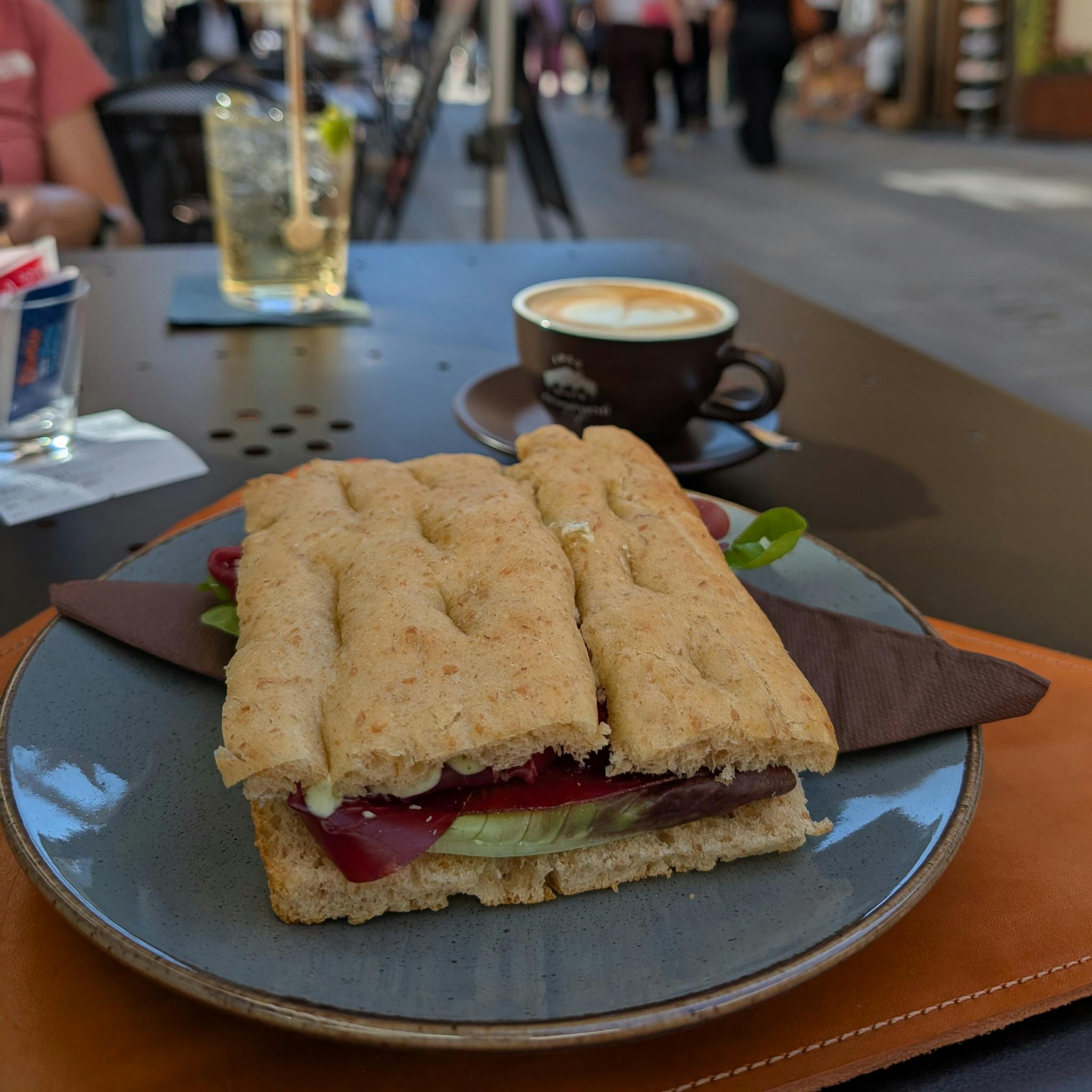
Stopping for lunch at a trailside café or restaurant is the priciest option, usually €18–€25 for a warm meal and a drink. We did this in Courmayeur because the Italian food is genuinely worth it. A rest day there with a proper pasta lunch is hard to regret.
Don't forget drinks. A beer or glass of wine at the refuge in the evening costs €4–€7. Coffee in the morning is usually €3–€5. These little things add up over 10 days more than you'd expect.
Realistic daily food cost (on top of half board): €15–€30 depending on your choices.
The Switzerland factor
When crossing into Switzerland, the landscape shifts, the villages get quieter, and the currency changes too. Switzerland uses the Swiss franc, not the euro. In practice, most places along the route accept euros without any problem, and a few times when paying for small things, like a coffee, a snack, a shower token, they just used a 1:1 exchange rate to keep it simple. But at the hotels and restaurantes they may only accept Francs.
What you should be prepared for is a general increase in prices. Food and accommodation are noticeably more expensive than on the French and Italian sections. It's not dramatic, but it's consistent, and if you're not expecting it, it can feel like a surprise when you check out.
Create your perfect itinerary with our Hike Planner
Plan every stage of your hike with official routes, variants, and real-world trail data, all in one place.
- Curated hike data with official routes, variants, and more
- Design your hike stage by stage
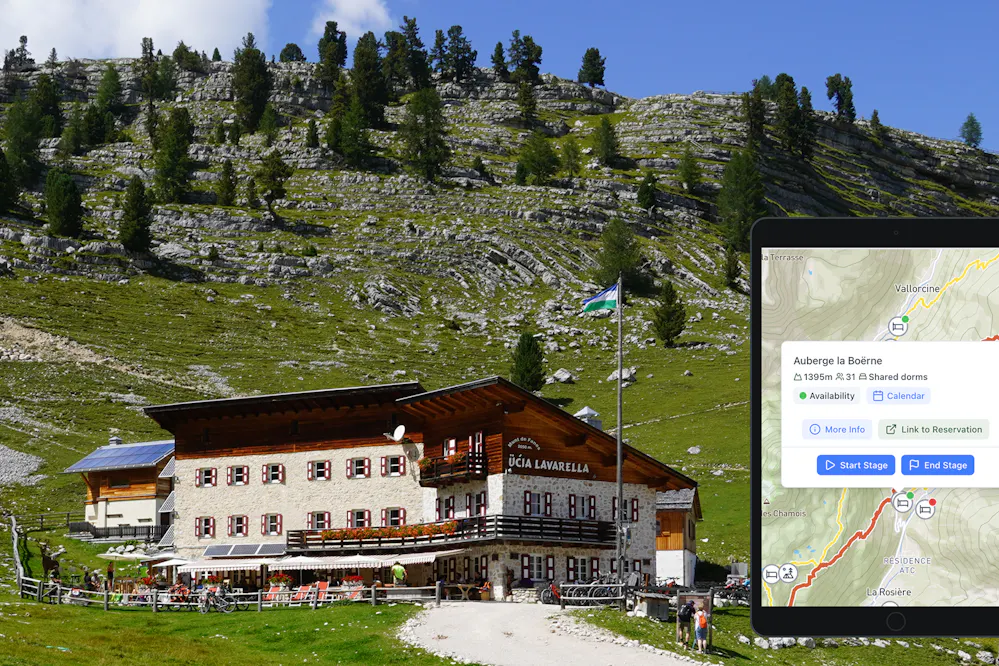
- Find huts with real-time availability
- Download GPX files for your favorite navigation app
- Generate a printable PDF for your hike
The key, if you want to save money without missing out on anything, is to mix a bit of everything. A few nights in the alpine huts gives you that classic refuge experience, the communal dinners, the views from the terrace, the conversations with other hikers. A few nights camping or bivouacking in the mountains adds a completely different layer to the trip, and brings the average cost right down.
The same logic applies to food. We'd definitely recommend spending a little on local cuisine, the French Savoyard dishes, a proper pasta in Courmayeur, because that's part of what makes the TMB special. But since the route passes through so many small towns and villages, it's completely realistic to do your own groceries, pack your own lunches, and cook some of your own meals.
If you want help building your itinerary and finding your accommodations, check our Hike Planner tool. We also have a full guide for Tour du Mont Blanc, with interactive maps, elevation profile, stage by stage descriptions and other tips.