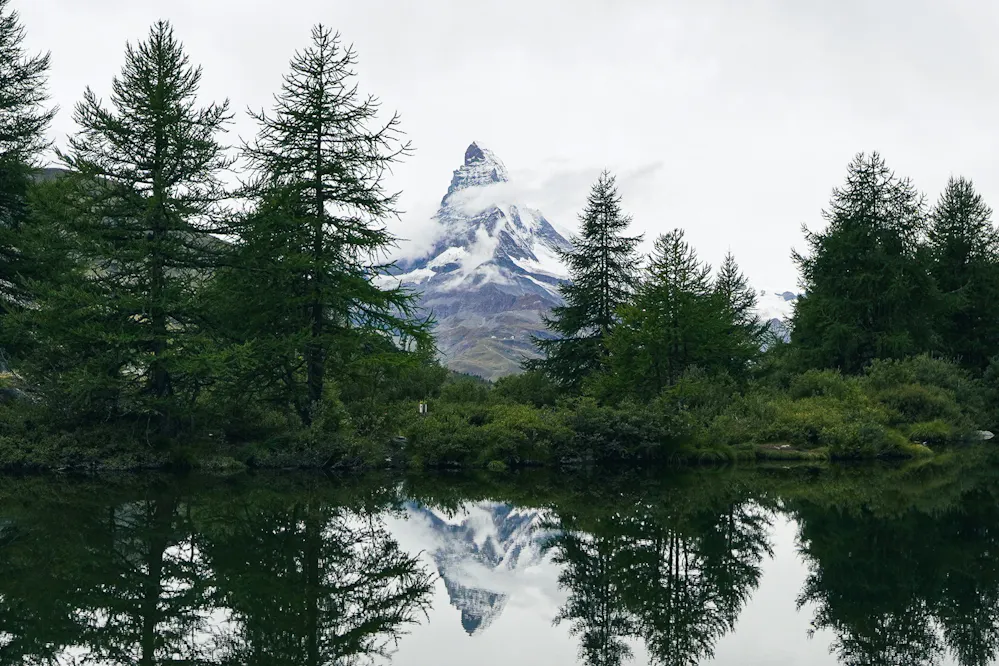
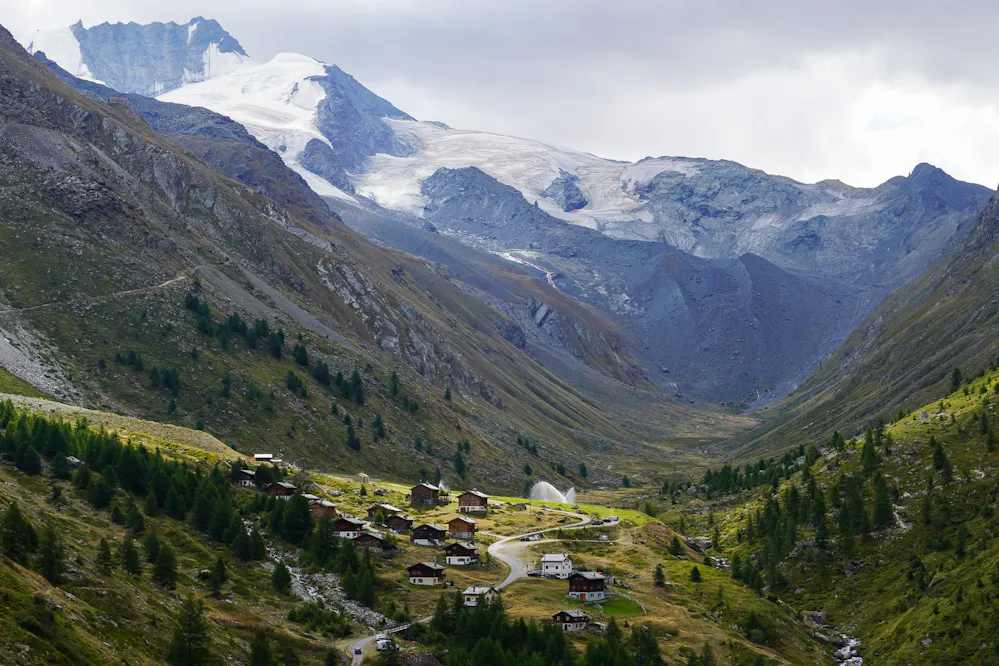
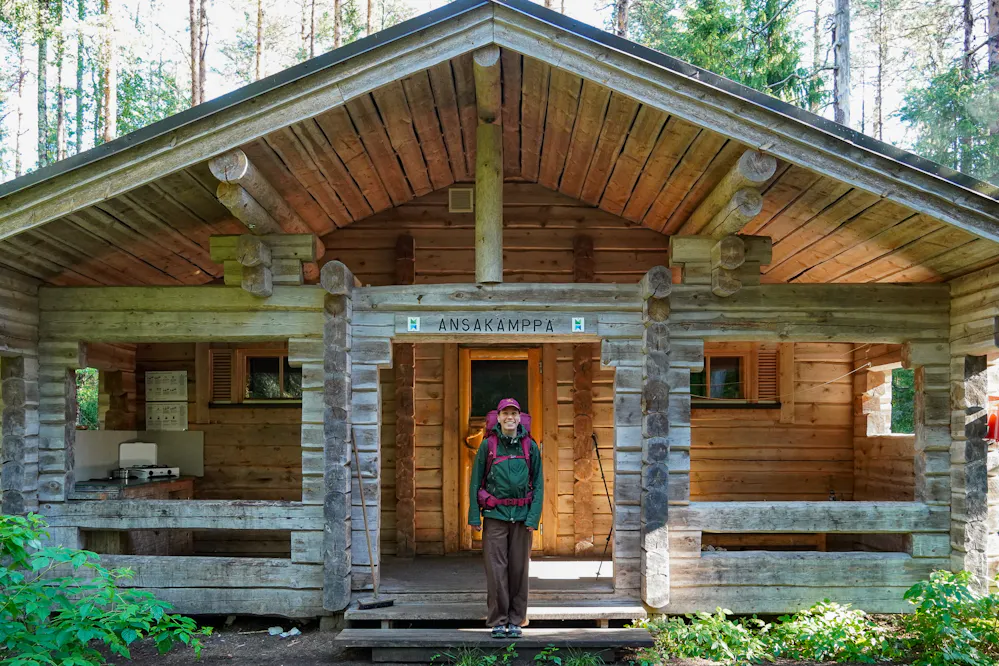
The STF huts on the Kungsleden are simple, self-service and very well organized, but it's a bit different than other huts in Europe, like in the Alps and the Pyrenees. There is no dinner and breakfast included, no private dorms, electricity or running water, and everyone needs to help chopping wood, collecting water and keep it clean. This post explains how the STF huts work, what you can find in them, what they cost, and when the STF membership pays for itself.
What all STF huts have
All the huts along the Kungsleden are run by STF (the Swedish Tourist Association), and they follow the same standards. They are about 10 to 20 km apart, which is roughly one day of walking. They are simple on purpose: no electricity, no running water. What you can count on in every hut:
- A dry toilet (outdoor)
- Shelter, plus a safety room that stays open when the hut is closed, with an emergency phone at many of them
- Staff: a cabin host who shows you around and explains how everything works
- A dry room to hang wet clothes and boots
- A guest kitchen with gas and utensils for cooking
The hosts work on a voluntary basis, and they usually take a break in the middle of the day. STF says the minimum opening hours are 8 to 10 in the morning and 16 to 20 in the afternoon, and many hosts stay open longer.


Mountain stations vs mountain huts
STF has two types of accommodation on the trail, and the difference is big.
Mountain stations are bigger, like a mix of a mountain hotel, hostel and guesthouse. On the Northen Kungsleden, these are the Abisko and Kebnekaise. They have a restaurant with breakfast, lunch and dinner, a shop, common rooms, and rooms that go from simple bunk beds to hotel standard with a private shower and toilet. They also have hot showers.
Mountain huts (STF calls them mountain cabins) are the basic ones along the trail. They only offer shared dorms with bunk beds, and everything is self-service. This is the type of hut you will sleep in most of the time on the Kungsleden.
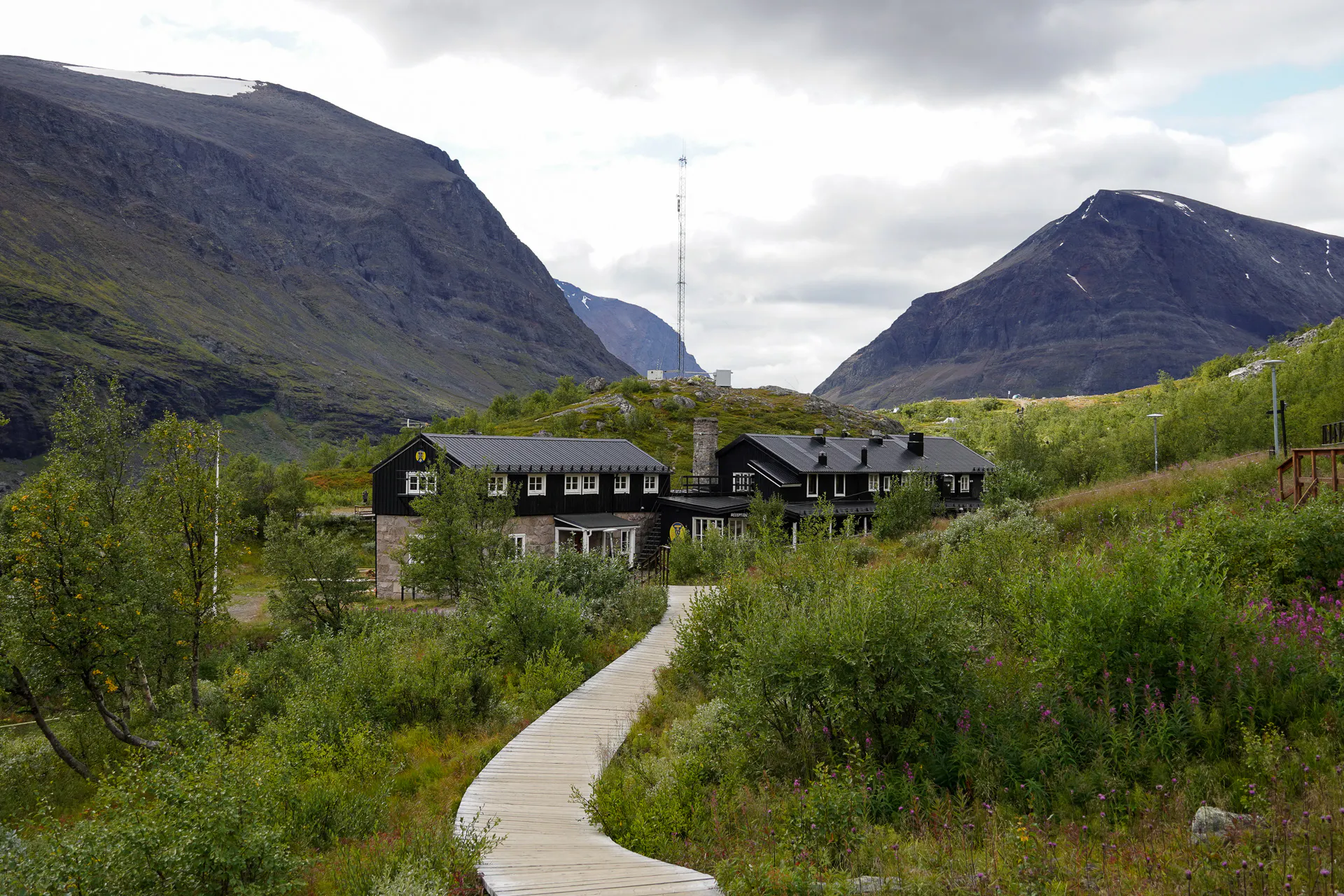
Kebnekaise Mountain Station
How a night in a mountain hut works
If you are used to the huts in the Alps and other mountains in Europe, this is the big difference: the night does not come with half board. You pay for the bed only, and you need to carry your own food, or buy it in one of the shops on the way. Then you cook in the guest kitchen. Here is what to expect:
- Shared dorm. You sleep in a bunk bed, and the host assigns your bed when you arrive. A duvet and a pillow are provided, but you must bring your own bed linen: a bottom sheet, a pillowcase, and a duvet cover, travel sheet or sleeping bag. You cannot sleep directly on the bedding. If you forget, some shops sell single-use sheets.
- Self-service. You fetch your own water, chop wood and light the stove together with the other guests. The kitchen has gas and utensils for cooking. Keep it clean, and leave it ready for the next person.
- Plan your meals. Pack enough food for the days between shops, because not every hut has one.
- Booking. You can book all huts in advance on the STF website. Some huts are more popular than the others, so if you don't want to take risks, it is recommendable to book all nights in advance.
- Payment. Cash in Swedish kronor works everywhere. Card works at many huts in the Abisko to Kebnekaise area, but the signal is not always good, so keep some cash.
The price for a bed in a mountain hut in summer on the Kungsleden is 480 SEK per night for an STF member who books in advance, and 530 SEK if you pay on site. Non-members pay 100 SEK more per night.

Kaitumjaure Mountain Hut
What only some huts have
Not every hut has a sauna, and not every hut has a shop. Check the hut list in advance if you depend on one of them. Also, there are no showers in the huts. The exception is the biggest ones, like the Kebnekaise mountain station, where showers are included. In the small huts, the sauna is the closest you get to a shower, and I explain how that works below.
Sauna (bastu): how it works and how to shower
A sauna at a mountain hut is one of the best things on the trail, and it is also the only "shower" you will find in most huts. The details change from hut to hut, so the host will explain how it works, but this is the usual system.
Hours and fee. The sauna runs on a schedule, with separate hours for women and men, and usually some mixed hours. Check the times on the door or ask the host when you arrive. If you are camping, the service fee covers the sauna.
Everyone helps. The sauna is wood-fired, and it only works if every guest does a little. Add some wood to the stove when it needs it, collect water, and keep it clean and leave the sauna ready for the next group.
Cooling down. The sauna building is usually close to a river or lake, and the common practice is to go outside and cool down in the fresh water between rounds. Keep it for cooling down only: no soap in the water.
Nudity and hygiene. In the sauna you are allowed to be naked or to uncover parts of your body, and nobody cares. But always take a towel and sit on it, for hygiene. This is a shared space, so it is a basic rule.
How to wash. You will find buckets and bowls in a room before you enter the sauna. There is a wood-burning water boiler and you can mix hot and cold water and wash yourself. You are allowed to use soap inside the sauna area.
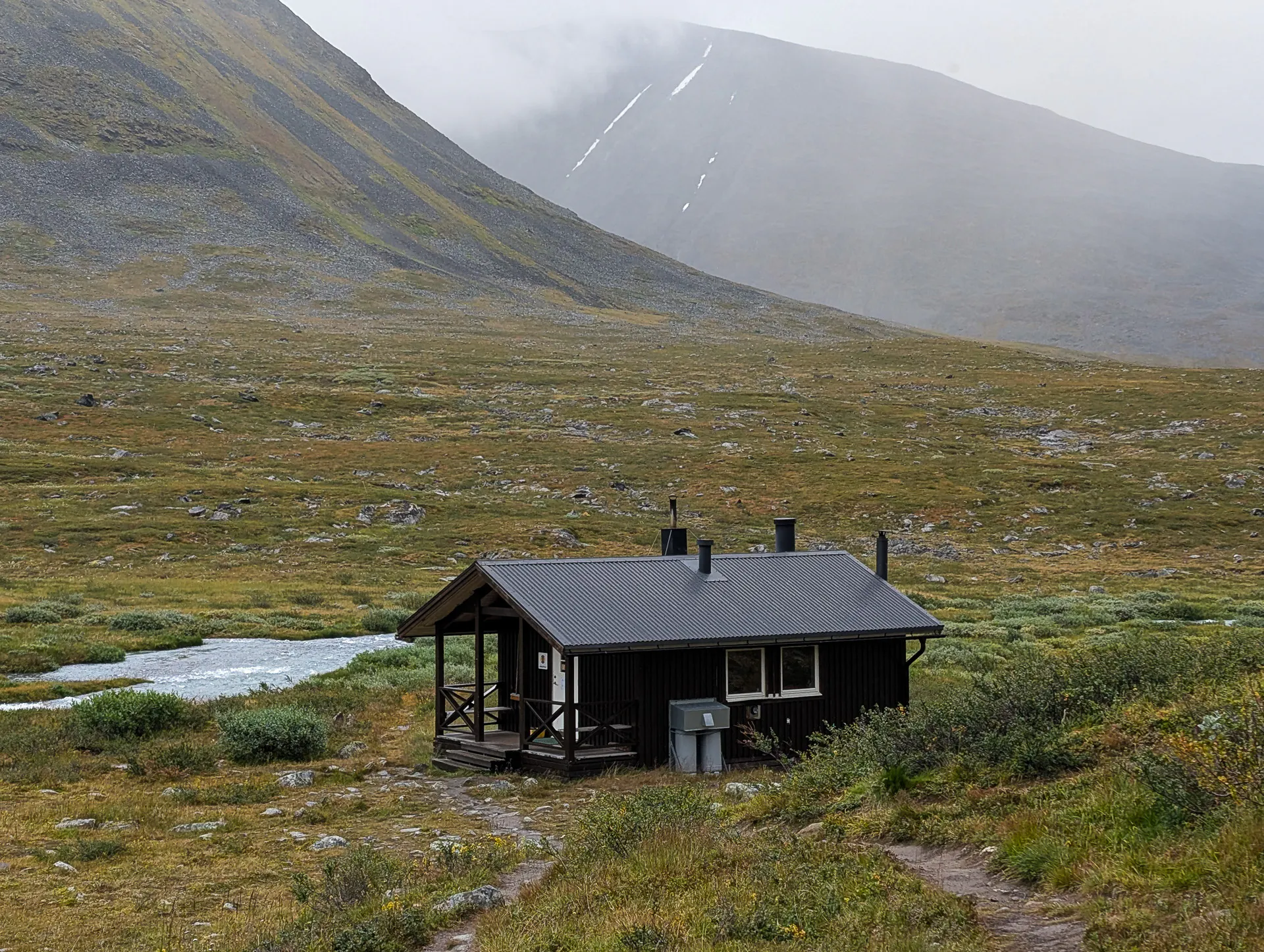
Sauna building in a STF Hut
Shops: what you can find and what it costs
STF has two types of mountain shop: small and large. A small shop has a limited range, but enough to make a complete meal. A large shop has a wider selection. Not all huts have a shop, and some items can be out of stock, so our advice is to use the shops as a top-up and never as your main food plan.
These are the things you can usually find:
- Food: freeze-dried meals, canned food, soup powder, bread, cheese, noodles, chocolate and snacks
- Pasta, oats, rice and lentils, which you buy by weight, so you can take only the amount you need
- Coffee, tea and hot chocolate
- Gas canisters
- Basic supplies like toilet paper, matches, plasters and mosquito repellent
- Souvenirs, like the STF Kungsleden badge and buffs
On prices, the freeze-dried meals were around 140 SEK on average, and a sachet of coffee or hot chocolate powder is about 10 SEK. Everything is more expensive than in a normal supermarket, which makes sense because it all has to be transported to the mountains.
If you plan to leave early in the morning, do your shopping the day before, because the shop is only open when the host is there.
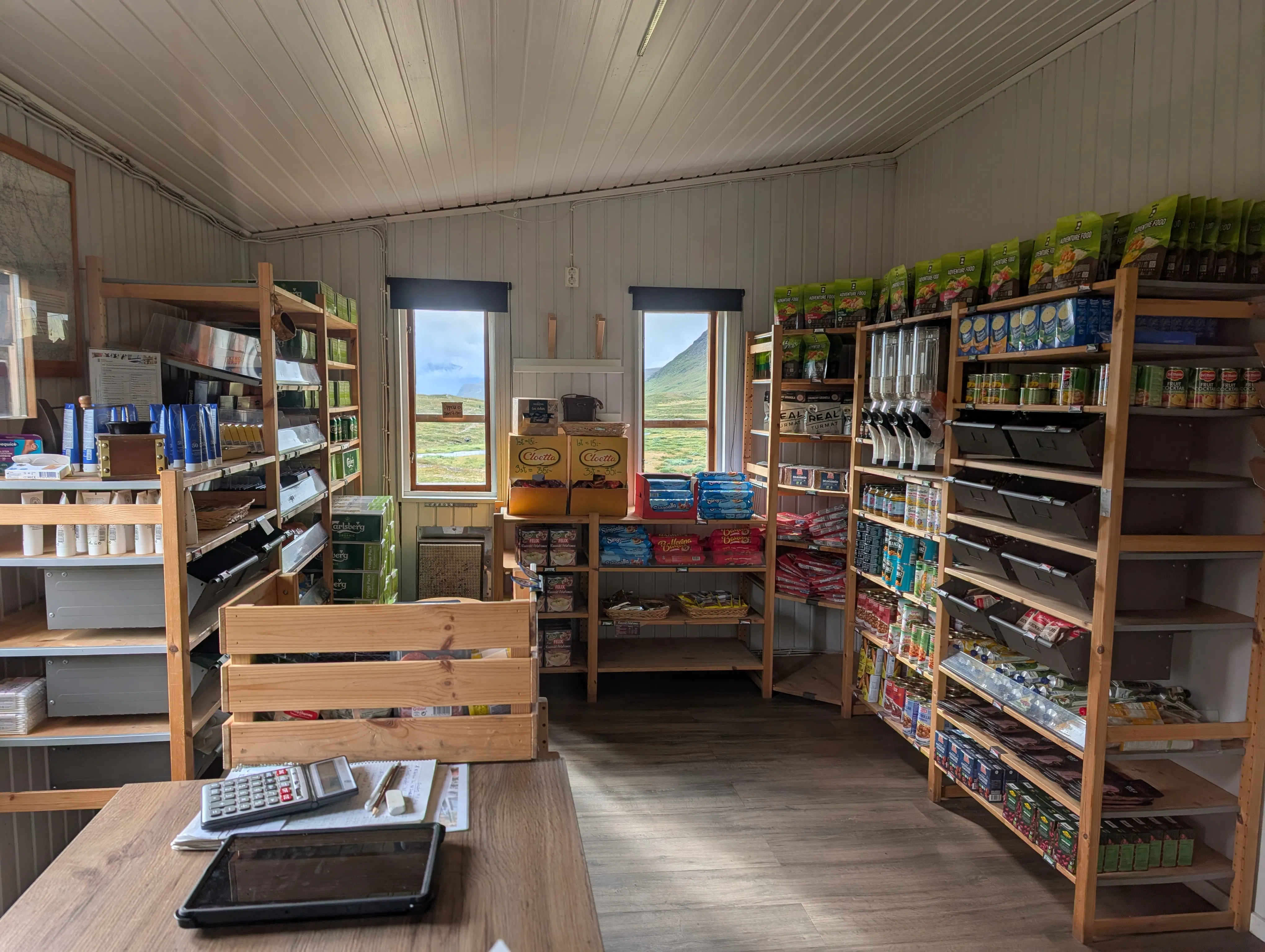
A shop in a STF hut
STF membership: how much it costs and when it is worth it
An STF membership is valid for 12 months and costs:
- Adult (26 to 74): 375 SEK
- Youth (16 to 25): 195 SEK
- Senior (75+): 230 SEK
- Family (two adults plus young people living at the same address): 600 SEK
Children under 16 cannot have a membership, but they travel at member prices when they are with a member.
The member discount is 100 SEK per night per person at the mountain huts and stations. It also works for the camping service fee: 210 SEK for members against 310 SEK for non-members. So every night you use an STF facility saves you 100 SEK, whether you sleep in a bed or camp next to the hut and use the sauna.
The math is simple. An adult membership costs 375 SEK, so you need 375 / 100 = 3.75 nights, which means 4 nights to break even. So if you plan 4 or more nights in the huts, or camping next to them with the service fee, the membership is worth it. If you are two adults, the family membership is cheaper than two adult memberships (600 SEK against 750 SEK), and you break even after 3 nights together. For a youth membership (195 SEK), 2 nights are enough. If you only sleep one or two nights in an STF hut and wild camp the rest, you can skip it.
Two practical tips: the discount applies when you book through STF, and you need to show your digital membership card at check-in. Download it before the hike, because it works without internet.
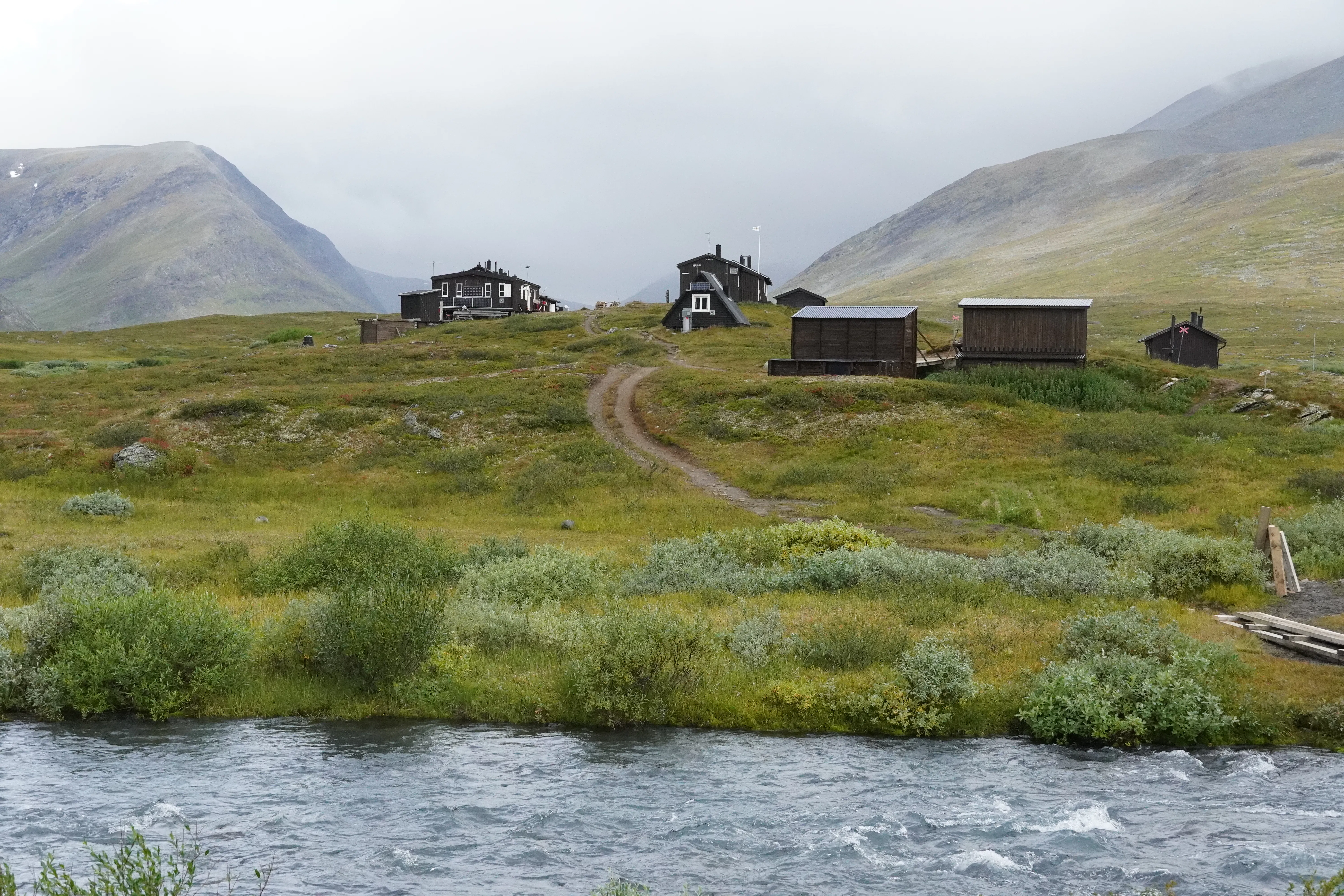
STF Sälkastugan
Frequently asked questions
Our advice is to do the math for your own route before you book. Count the nights in huts and the nights you would camp next to one, and see if the membership makes sense. You can plan your route and see where the huts and shops are in the Hike Planner.
Discover our Hike Planner
Create your perfect itinerary with our Hike Planner
Plan your long-distance hike stage by stage, with trail data verified by us on every route. All in one place.
- Curated hike data with official routes, variants, and more
- Design your hike stage by stage
- Find huts with real-time availability
- Download GPX files for your favorite navigation app
- Generate a printable PDF for your hike