Long-distance hiking is one of the most rewarding ways to experience the outdoors. It allows us to move slowly through landscapes, cross mountain passes, sleep close to nature, and connect with places in a deeper way.
But every step we take has an impact.
A single hiker may seem insignificant. A shortcut around a muddy section, a piece of toilet paper left behind, a loud conversation near a campsite, or food scraps dropped beside a trail may not feel like much in the moment. But when thousands of hikers repeat the same small actions over a season, the cumulative effect can be significant.
Trails widen. Campsites become damaged. Wildlife changes its behaviour. Water sources become contaminated. Local communities and land managers face more pressure. Other hikers lose the sense of wildness and quiet they came to find.
This is where Leave No Trace becomes essential.
Leave No Trace is not about making outdoor experiences restrictive or complicated. It is about learning how to enjoy nature while reducing our impact as much as possible. It is a practical ethic for anyone who spends time outdoors, whether on a short day hike, a multi-day trek, or a long-distance route through several countries.
At Gear Tips, we believe that good planning and responsible hiking go hand in hand. As a partner of Take a Hike, we see route information, terrain awareness, accommodation planning, appropriate gear, and respect for the places we visit as part of the same responsible hiking mindset.
The 7 Leave No Trace Principles offer a clear framework to help hikers make better decisions before, during, and after their journey.
1. Plan ahead and prepare
Responsible hiking starts before you set foot on the trail.
Planning ahead helps you stay safe, reduce unnecessary risks, and avoid decisions that can damage the environment. This includes understanding the route, checking weather conditions, knowing local rules, booking huts or campsites when required, carrying the right equipment, and being realistic about your fitness and experience.
On long-distance hikes, planning is especially important. A poorly planned itinerary can lead to exhaustion, late arrivals, unsafe shortcuts, or camping in places where it is not allowed. It can also put pressure on local infrastructure, especially in popular hiking areas where huts and campsites may be fully booked months in advance.
Before you go, ask yourself:
- Do I understand the route and possible variants?
- Do I know where I am allowed to camp or bivouac?
- Have I checked local regulations and protected area rules?
- Am I carrying enough food, water, clothing, and navigation tools?
- Do I have a backup plan for bad weather, injury, or closed accommodation?
Good planning is not about removing adventure. It is about creating the conditions for a safer, more enjoyable, and lower-impact experience.
2. Travel and camp on durable surfaces
Where you place your feet matters.
Trails exist for a reason: they concentrate impact in one place instead of spreading it across fragile landscapes. When hikers cut switchbacks, walk around puddles, or create parallel paths, they contribute to erosion and vegetation loss.
As a general rule, stay on the established trail, even when it is muddy or wet. Walking around muddy sections may feel like the cleaner option, but it often widens the trail and damages the surrounding vegetation.
Camping also requires care. Whenever possible, use established campsites, designated camping areas, huts, or legal bivouac spots. These places are usually chosen because they can handle repeated use better than fragile, undisturbed terrain.
Avoid camping on delicate vegetation, near water sources, or in places where your presence may disturb wildlife or other hikers. A good campsite is found, not made. Do not dig trenches, move rocks, cut branches, or modify the site to make it more comfortable.
In popular areas, concentrate use on durable, established surfaces. In more remote places, avoid creating visible new impacts.
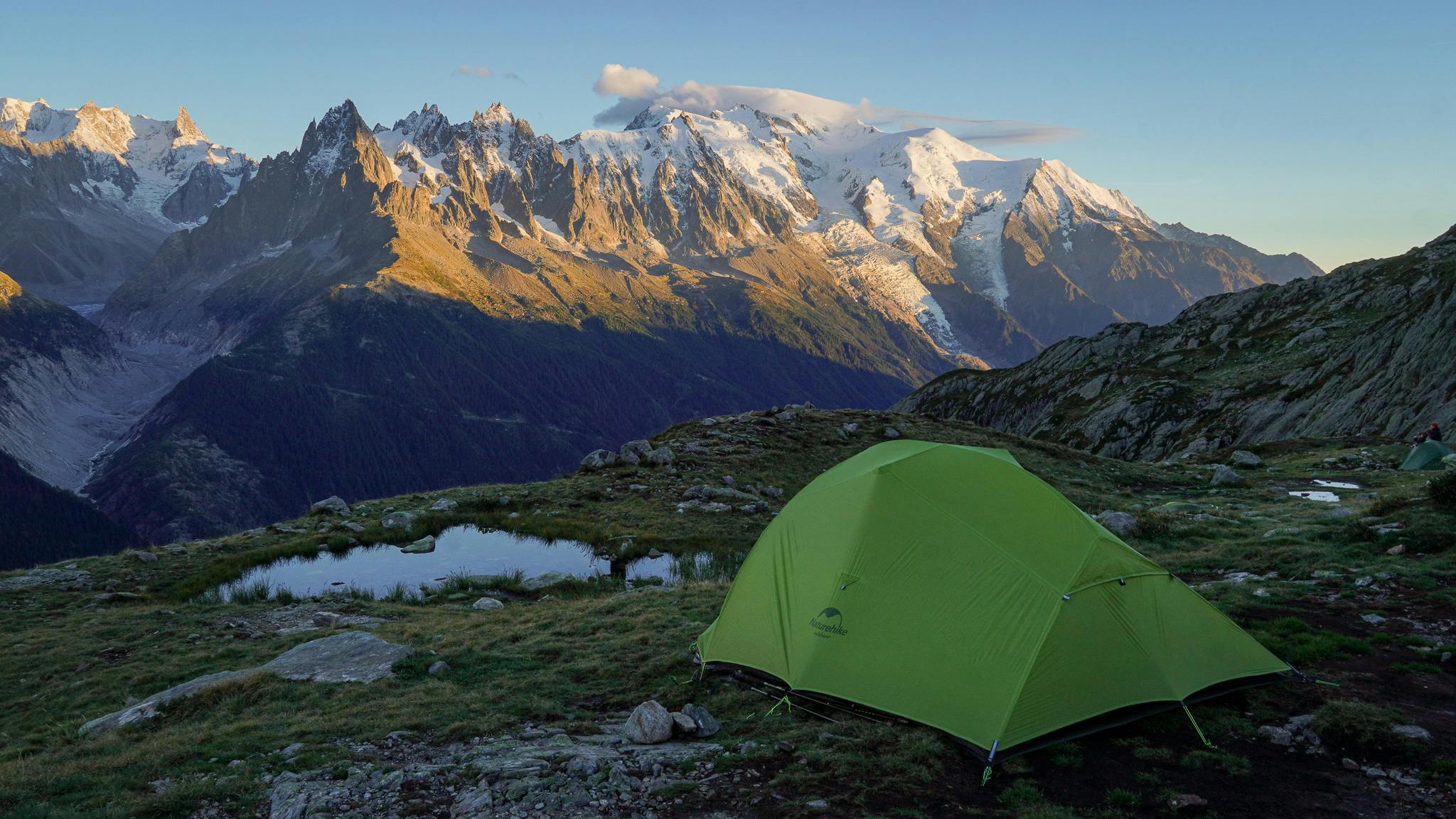
Regulated bivouac area Lac des Cheserys, French Alps
3. Dispose of waste properly
Everything you bring into nature should leave with you.
Trash is one of the most visible forms of outdoor impact, but waste goes beyond packaging. Food scraps, toilet paper, hygiene products, wastewater, and even biodegradable items can create problems when left behind.
A banana peel or orange skin may seem natural, but it does not belong in most mountain environments. Food waste can attract animals, alter their behavior, and make campsites less pleasant for everyone.
The basic rule is simple: pack it in, pack it out.
Carry a small trash bag and use it for all packaging, food scraps, used tissues, and hygiene waste. If you find litter left by others and can safely carry it, consider packing it out as well.
Human waste also needs attention. In some areas, toilets are available at huts, campsites, or trailheads. Use them whenever possible. In places without facilities, follow local regulations. Depending on the environment, this may mean digging a proper cathole far from water, trails, and campsites, or packing out waste in a designated waste bag.
Never leave toilet paper exposed. Pack it out or dispose of it according to local guidance.
Clean water is one of the most valuable resources on any hike. Avoid washing dishes, clothes, or yourself directly in streams and lakes. Carry water away from the source and use a minimal amount of biodegradable soap only when appropriate.
4. Leave what you find
The best way to experience a place is to let it remain as it is.
Rocks, flowers, fossils, historical objects, bones, feathers, and cultural artifacts may seem like small souvenirs, but they are part of the landscape and its story. When each visitor takes something, the place slowly loses its character.
Take photos, make notes, and enjoy the moment, but leave natural and cultural objects where you find them.
This principle also applies to buildings, ruins, signs, shepherd huts, religious sites, and other cultural features along the route. Many long-distance hikes pass through landscapes shaped by centuries of human history. These places deserve respect.
Do not carve names into trees, rocks, huts, or signs. Do not build cairns unless they are part of the official trail marking system. Do not move objects to create photo opportunities.
Leaving what you find helps preserve the experience for the next hiker.
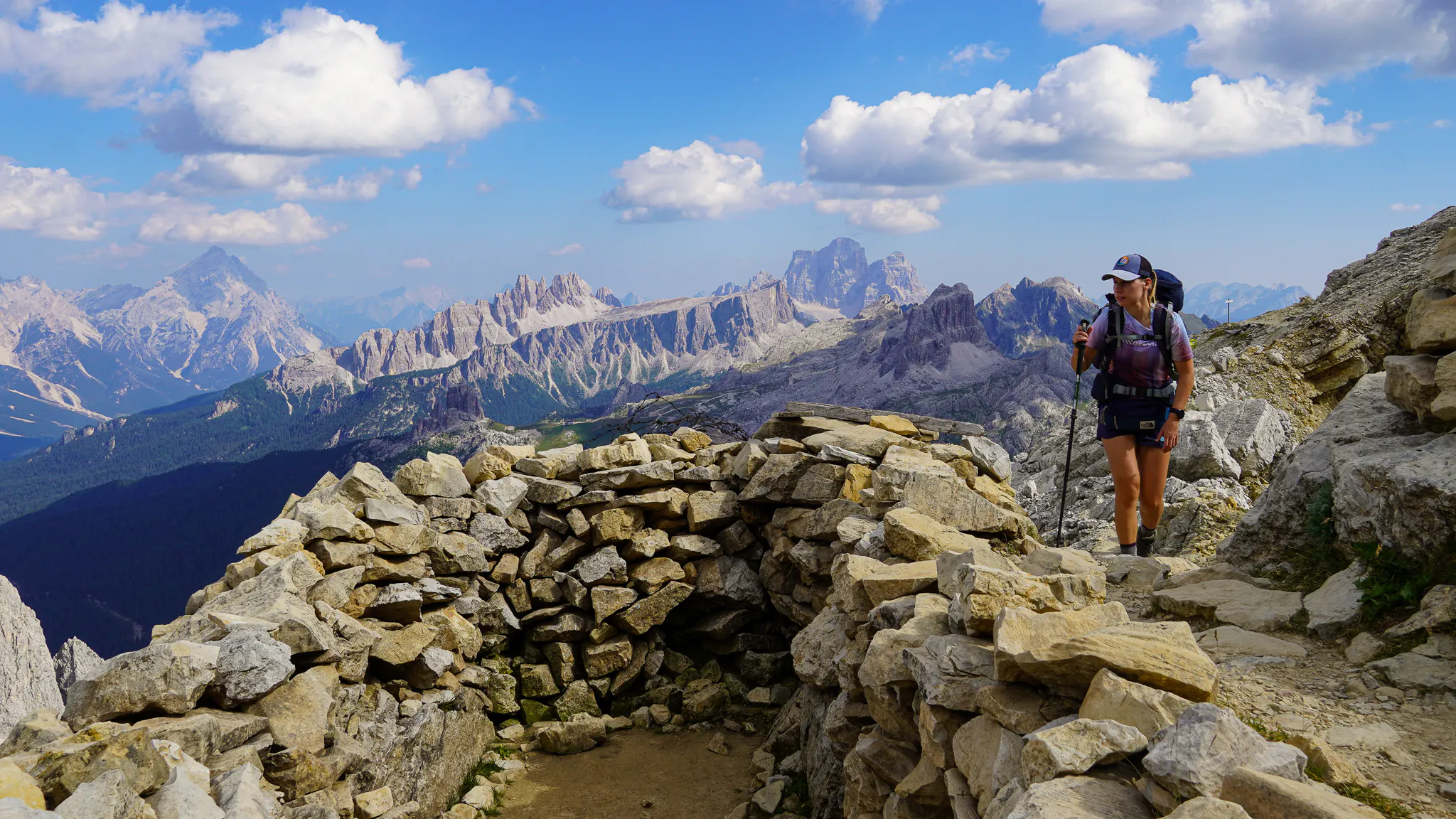
WWI ruins, Alta Via 1
5. Minimize campfire impacts
Fire can leave long-lasting scars.
In many hiking areas, campfires are either restricted or completely prohibited. This is especially true in dry regions, protected areas, alpine environments, and places with high wildfire risk.
Even where fires are allowed, they should not be treated as automatically acceptable. A campfire can damage soil, consume scarce wood, leave ash and charcoal behind, and create serious fire hazards.
For cooking, use a lightweight stove instead of making a fire. Stoves are cleaner, faster, safer, and much easier to control.
If fires are permitted and appropriate, use established fire rings, keep the fire small, burn only small dead and downed wood, and make sure everything is completely extinguished before leaving. Never cut live vegetation. Never leave a fire unattended.
In many places, the most responsible fire is no fire at all.
6. Respect wildlife
Wild animals are not part of the scenery. They live there.
Seeing wildlife on a hike can be unforgettable, but our presence can affect animals in ways we may not immediately notice. Getting too close, making noise, feeding animals, or leaving food unsecured can change their natural behavior and create risks for both wildlife and people.
Observe animals from a distance. Use your eyes, binoculars, or a camera zoom instead of approaching. If an animal changes its behavior because of you, you are too close.
Never feed wildlife. Feeding animals may seem harmless, but it can make them dependent on human food, increase aggressive behavior, expose them to danger, and disrupt their natural diet.
Store food securely, especially at campsites. Keep your cooking area clean and pack out all food scraps. In areas with bears, foxes, rodents, or other animals that seek human food, follow the specific storage regulations for that location.
If hiking with a dog, check whether dogs are allowed and keep them under control at all times. In some protected areas, dogs may be restricted because of wildlife, livestock, or conservation rules.
Respecting wildlife means giving animals the space they need to remain wild.
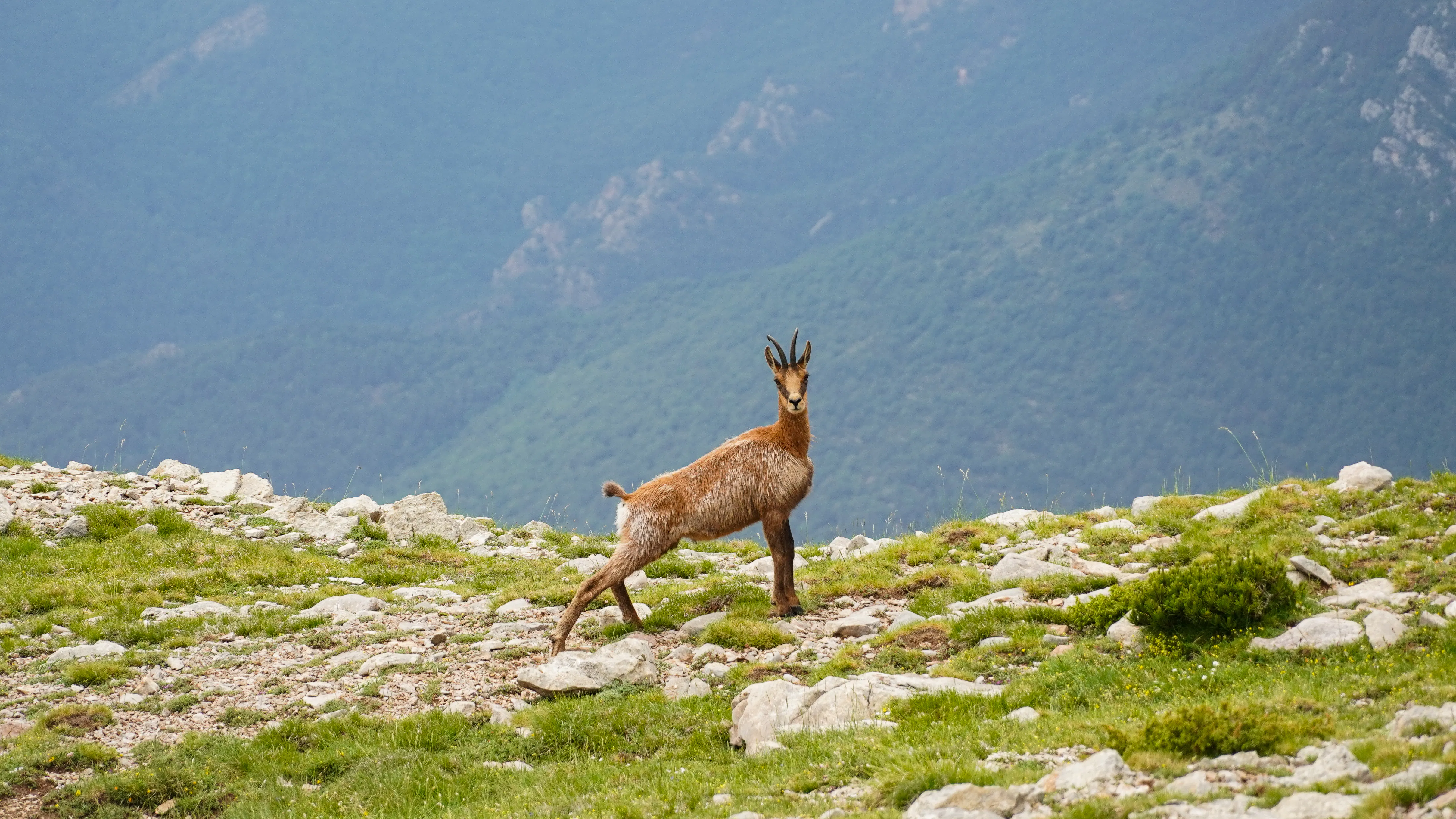
Pyrenees chamois
7. Be considerate of others
The trail is a shared space.
Every hiker has their own reason for being outdoors: solitude, challenge, connection, photography, training, reflection, or time with friends. Being considerate helps protect not only the landscape, but also the quality of the experience for everyone.
Keep noise low, especially near campsites, huts, viewpoints, and natural areas where people may be seeking quiet. Use headphones instead of speakers. Step aside when taking breaks. Let faster hikers pass safely. Be patient on narrow or exposed sections.
Respect local communities as well. Many long-distance routes pass through villages, farms, private land, working landscapes, and culturally important places. Close gates, follow signs, support local businesses when possible, and remember that access often depends on trust between visitors and the people who live there.
Trail etiquette is not only about politeness. It is part of keeping hiking routes open, welcoming, and sustainable.
Leave No Trace is a mindset
The 7 Leave No Trace Principles are not a checklist to complete once and forget. They are a way of thinking.
Every hike is different. A route through the Alps, a coastal trail, a volcanic landscape, a forest, or a remote mountain area will each require different decisions. Weather, season, local regulations, group size, wildlife, and terrain all matter.
The goal is not perfection. The goal is awareness.
Before making a decision outdoors, ask:
- Will this damage the trail, campsite, vegetation, water, or wildlife?
- Would this still be okay if hundreds of other hikers did the same thing?
- Am I respecting the people who live here, work here, and hike here?
- Can I make a lower-impact choice?
Small decisions, repeated by many hikers, shape the future of the places we love.
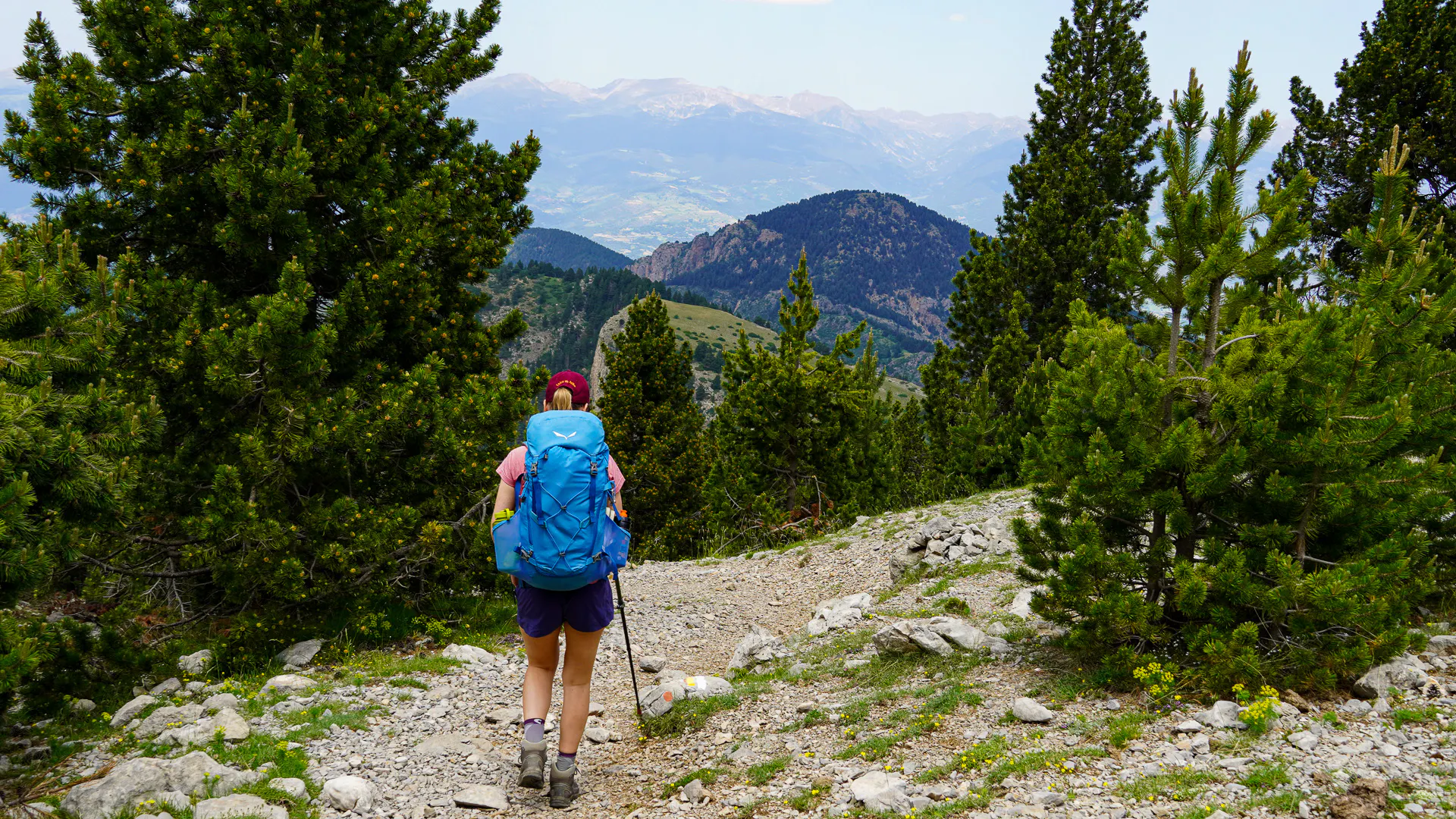
Cavalls del Vent Trail
Before you start your hike
As you prepare for your next adventure, take a moment to include Leave No Trace in your planning.
Check the local rules. Understand where you can sleep. Carry a trash bag. Know how to manage human waste. Stay on the trail. Respect wildlife. Keep noise down. Be kind to other hikers and local communities.
The more prepared we are, the easier it becomes to hike responsibly.
Take a Hike helps hikers prepare for long-distance routes with reliable information about distance, elevation, huts, campsites, GPX files, and route logistics. At Gear Tips, our role as a partner is to add an educational layer to that journey, helping hikers understand how to move through natural areas with more awareness, responsibility, and respect.
Good planning is not only about understanding where to go and how to get there. It is also about protecting the trails, landscapes, communities, and natural environments that make these journeys possible.
Enjoy the hike. Leave the place better than you found it. And help make sure others can experience it too.
Want to learn more about Leave No Trace?
This article is only an introduction to the 7 Leave No Trace Principles. If you want to go deeper, Gear Tips has a dedicated collection of articles, reflections, and educational resources about Leave No Trace, minimum impact practices, responsible outdoor recreation, and environmental education.
Explore more Gear Tips content about Leave No Trace here:
Leave No Trace articles by Gear Tips
The 7 Leave No Trace Principles are © Leave No Trace Center for Outdoor Ethics. Learn more at LNT.org.