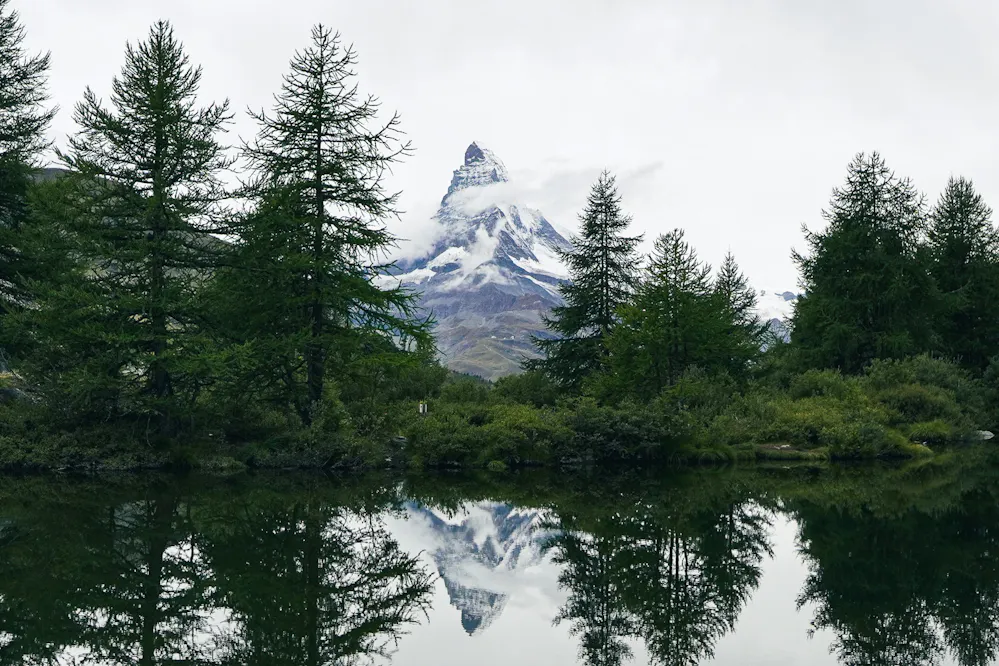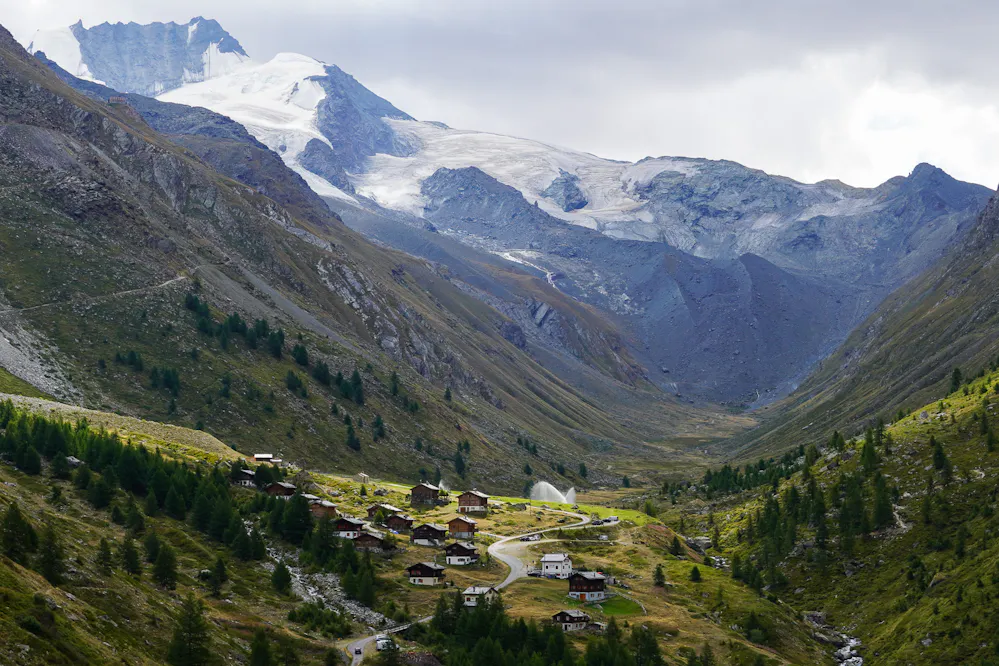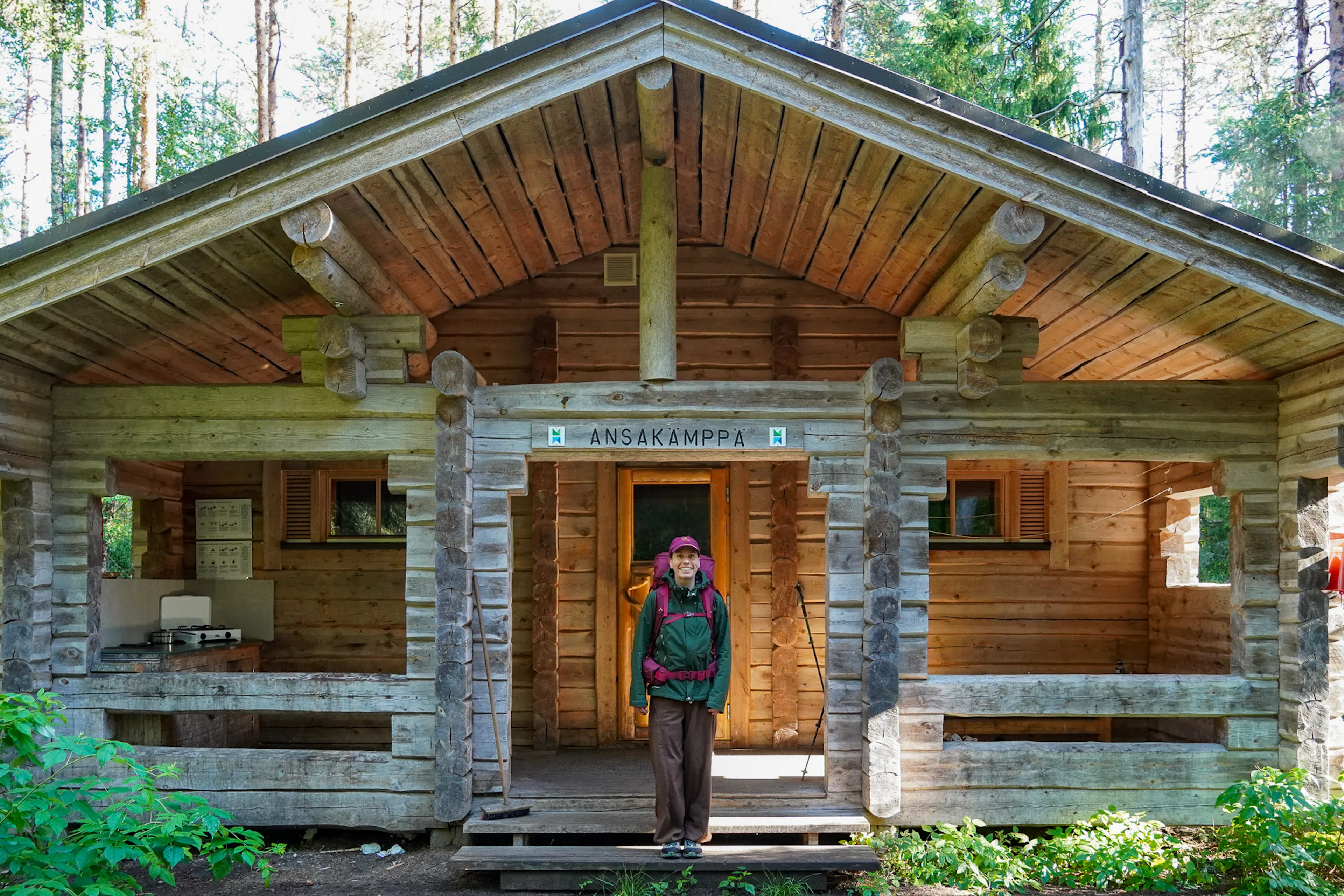
Finland doesn't have the big peaks you'll find in the Alps or the Pyrenees, but it makes up for it with something most other countries don't offer: the right to roam almost anywhere, and a network of free wilderness facilities along the trails, such as shelters, toilets and fire pits. If you're planning a hiking or camping trip there, understanding these two things will help you to take full advantage of what Finland has to offer.
In this post, we go through the right to roam (jokamiehenoikeudet, or everyman's right), the different wilderness installations you'll find on Finnish trails, and a few things worth knowing before you head out.
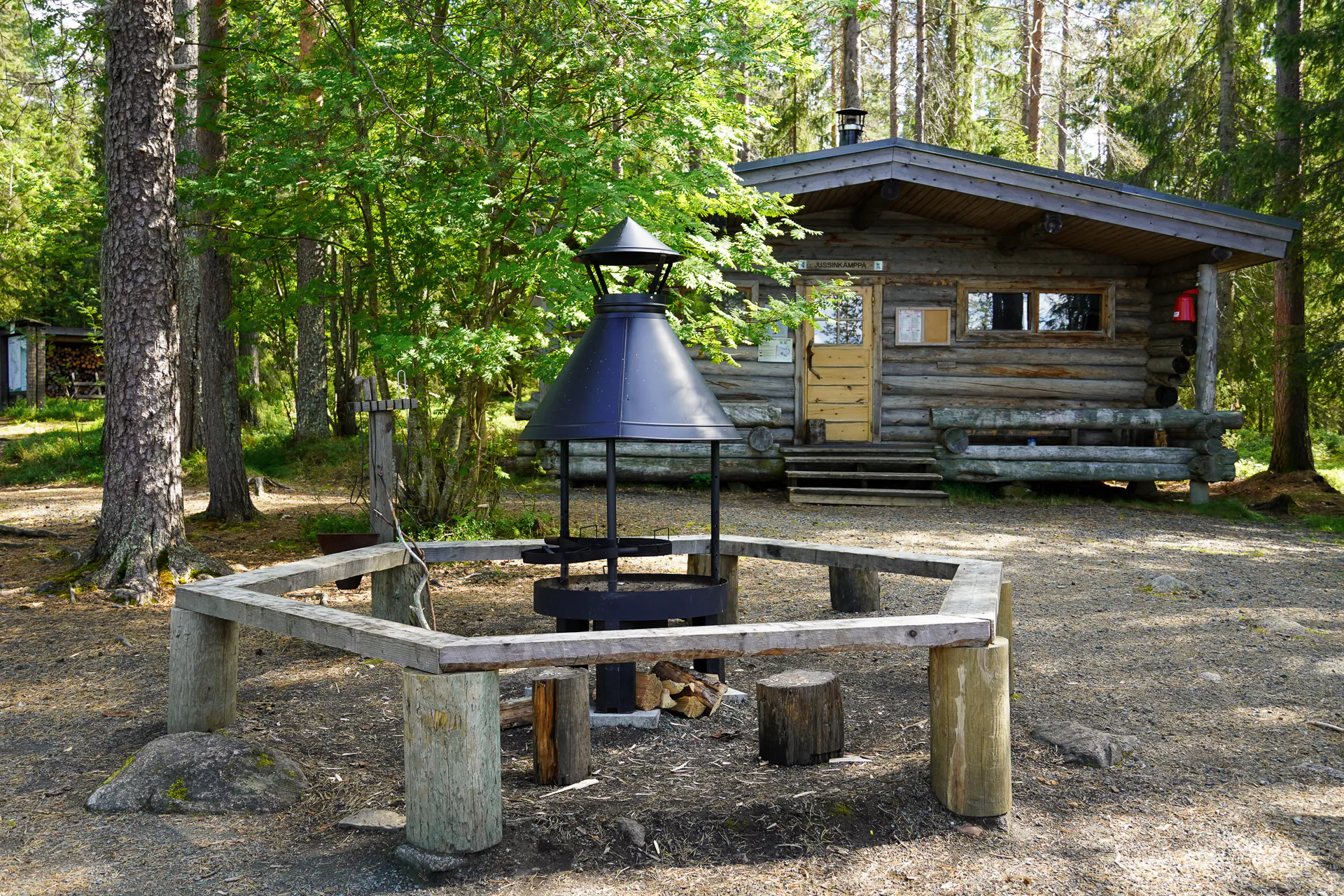
Jussinkämppä Wilderness Hut
The right to roam in Finland
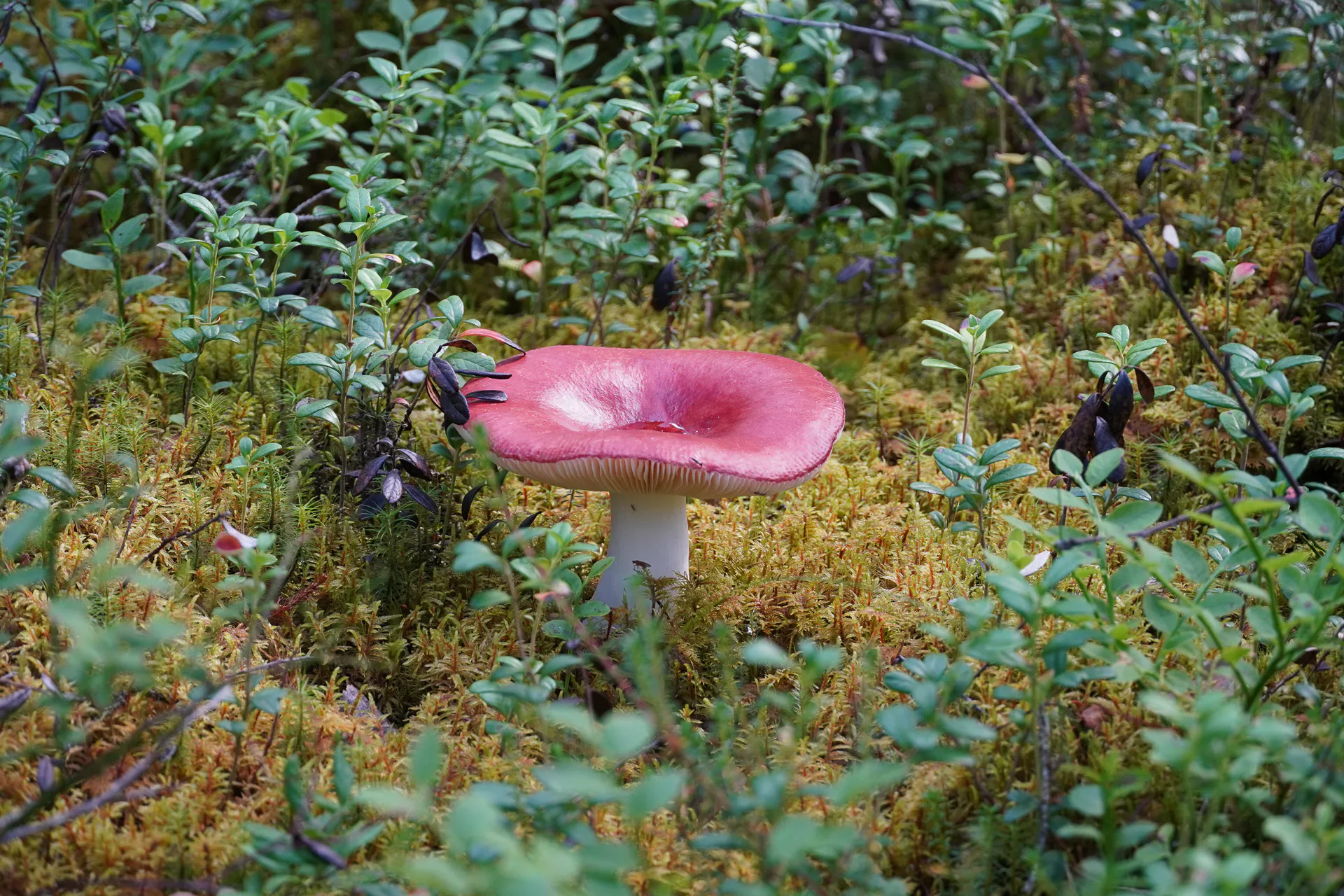
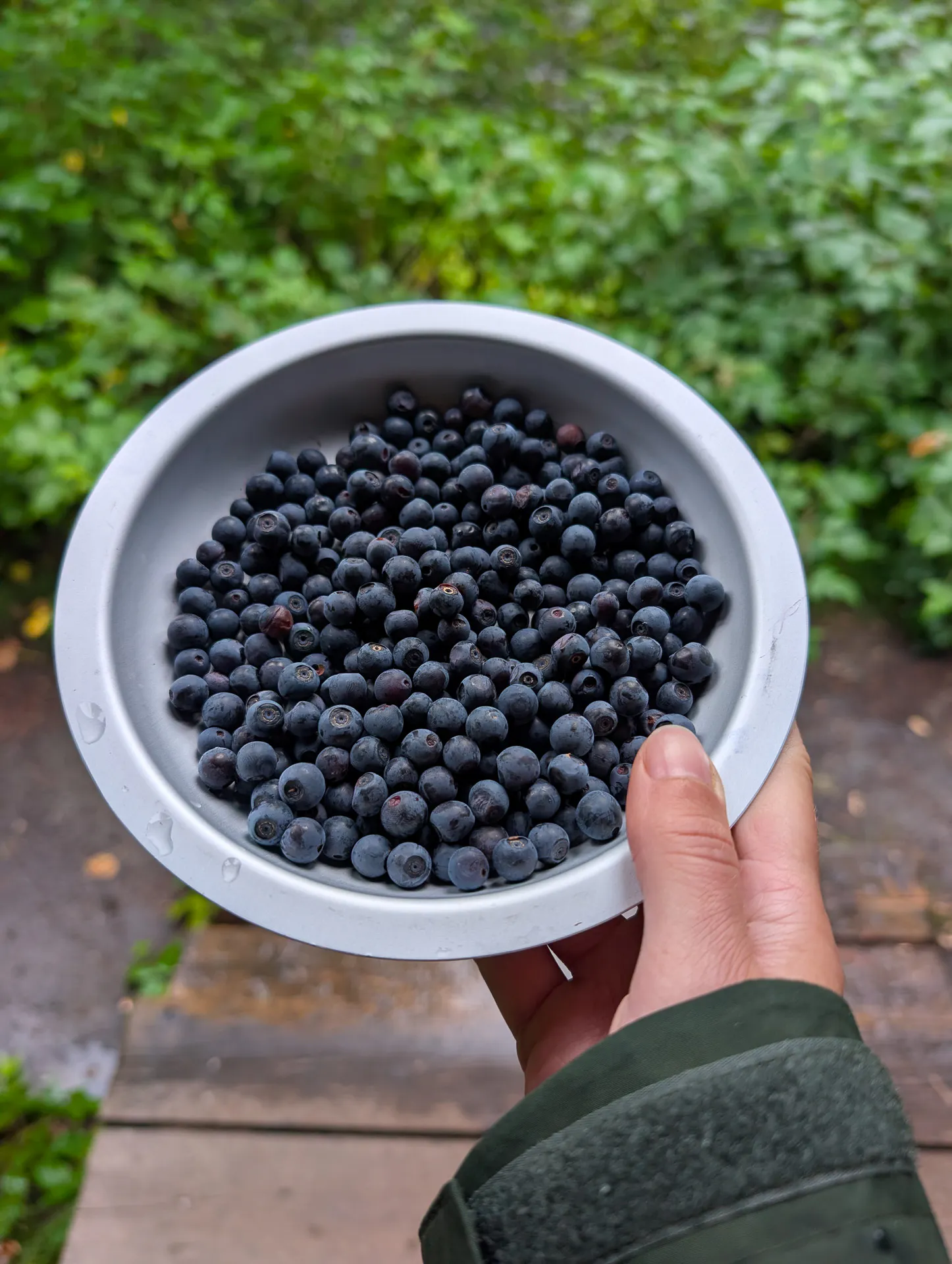
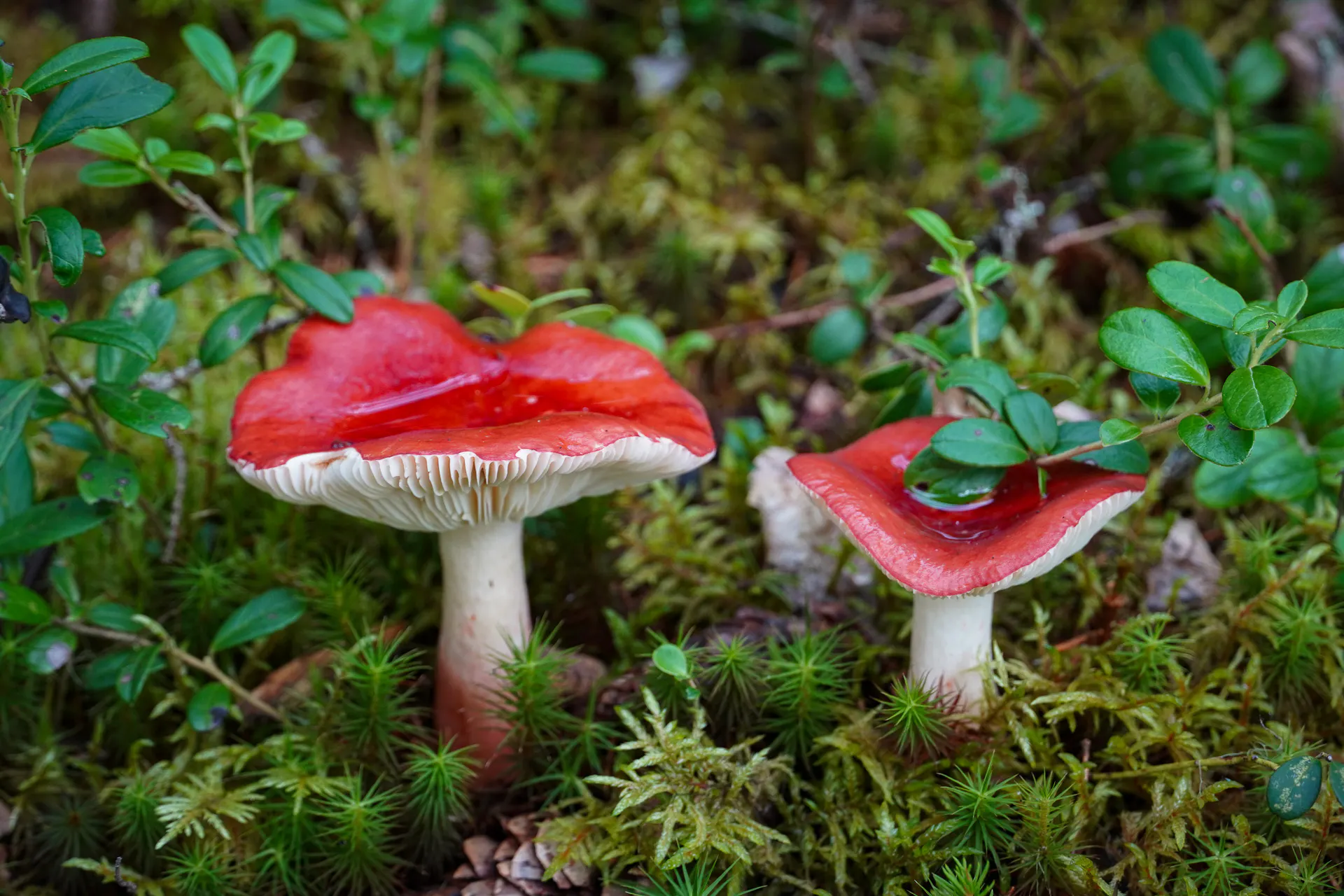
Like the other Nordic countries, Finland gives the public a lot of freedom to access nature. The right to roam means you can walk, camp, pick berries and mushrooms, and even fish in most lakes and rivers, without needing to ask permission or pay for access.
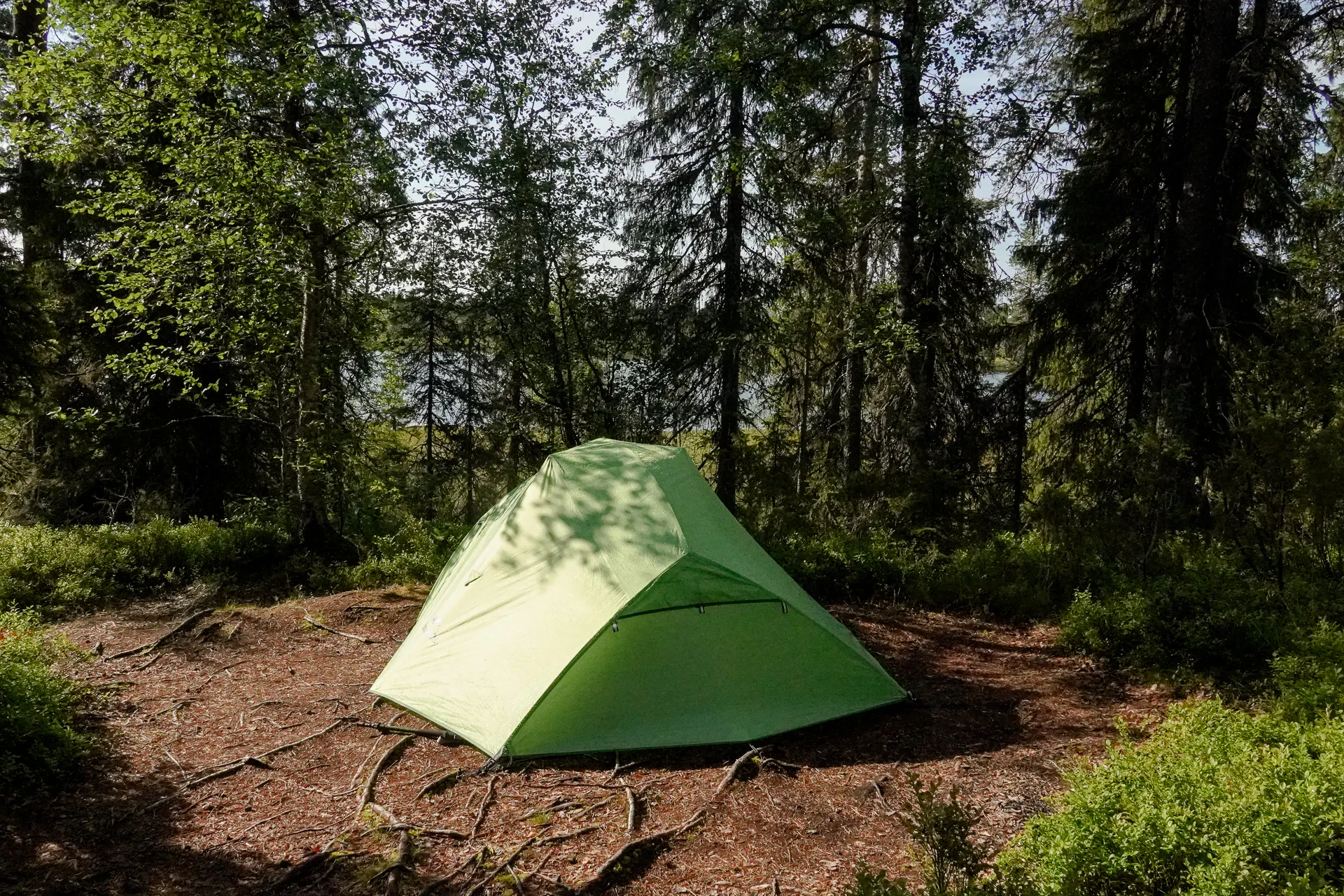
In practice, this means you can pitch a tent almost anywhere that isn't private land close to a house, an urban area, or a place with explicit restrictions, for a maximum of two nights in the same spot. Some national parks and protected areas narrow this down further, usually by requiring you to camp only in designated areas. It's worth checking the specific rules for any park before you go, since they're not identical everywhere.
The right comes with a responsibility attached: don't damage the land, don't disturb wildlife, and don't leave litter behind. It's a system that works because people respect it, not because someone is checking.
Wilderness installations along the trail
What surprised us most hiking in Finland, both in summer and winter, was how well equipped the trails are. You'll regularly find dry toilets, fire pits, wood sheds, camping spots, and even full wilderness huts, all free to use and maintained by local providers. There's no staff and no reservation system, so it only works if everyone who uses these places leaves them in good shape for the next person.
Trail maps and info boards usually mark all of this along the route, so you know what to expect before you set off. Here's what each type of facility actually means.
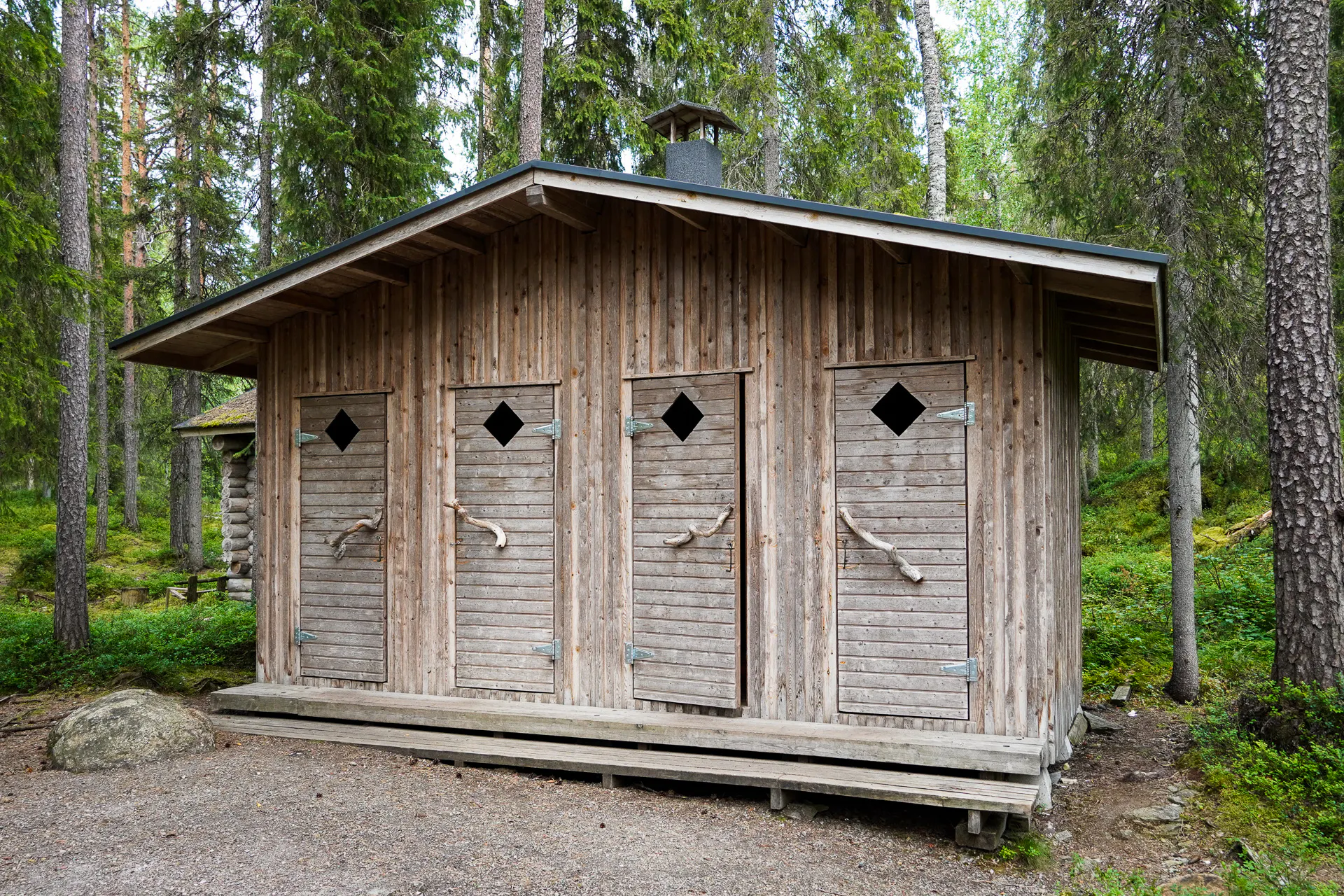
Huussi — the dry toilet
The dry toilet is about as basic as it gets, and you'll find one at almost every rest area we've stopped at in Finland. It's part of the country's cultural heritage. Even in cities, people used dry toilets well into the 20th century, and they're still common at summer cottages today.
You'll recognize a huussi as a small wooden cabin with a toilet seat, a shovel, and some composting material you're expected to add on top after use. Biodegradable waste, including food scraps and toilet paper, can go in there too.
Nuotiopaikka — the fire place and wood shed
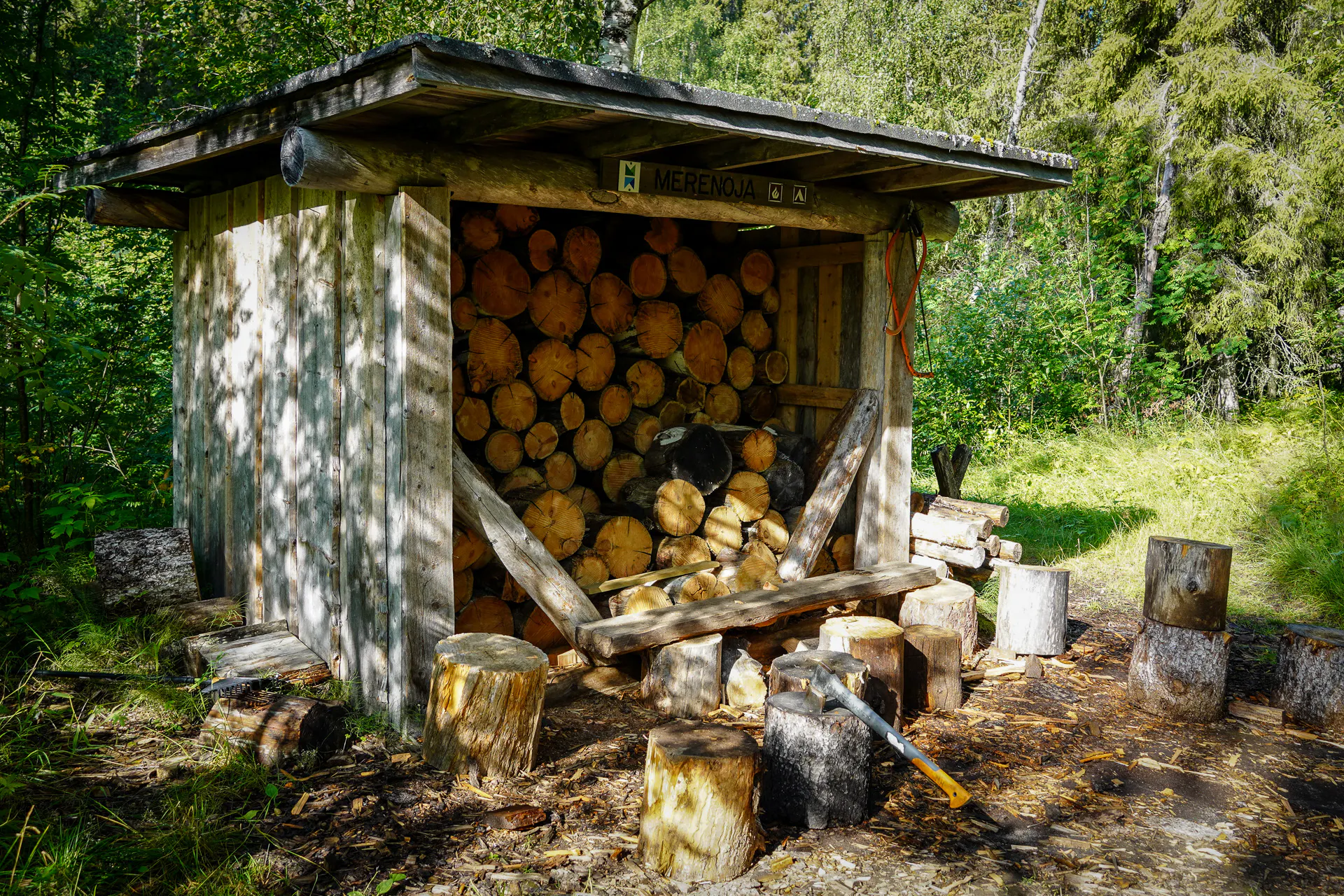
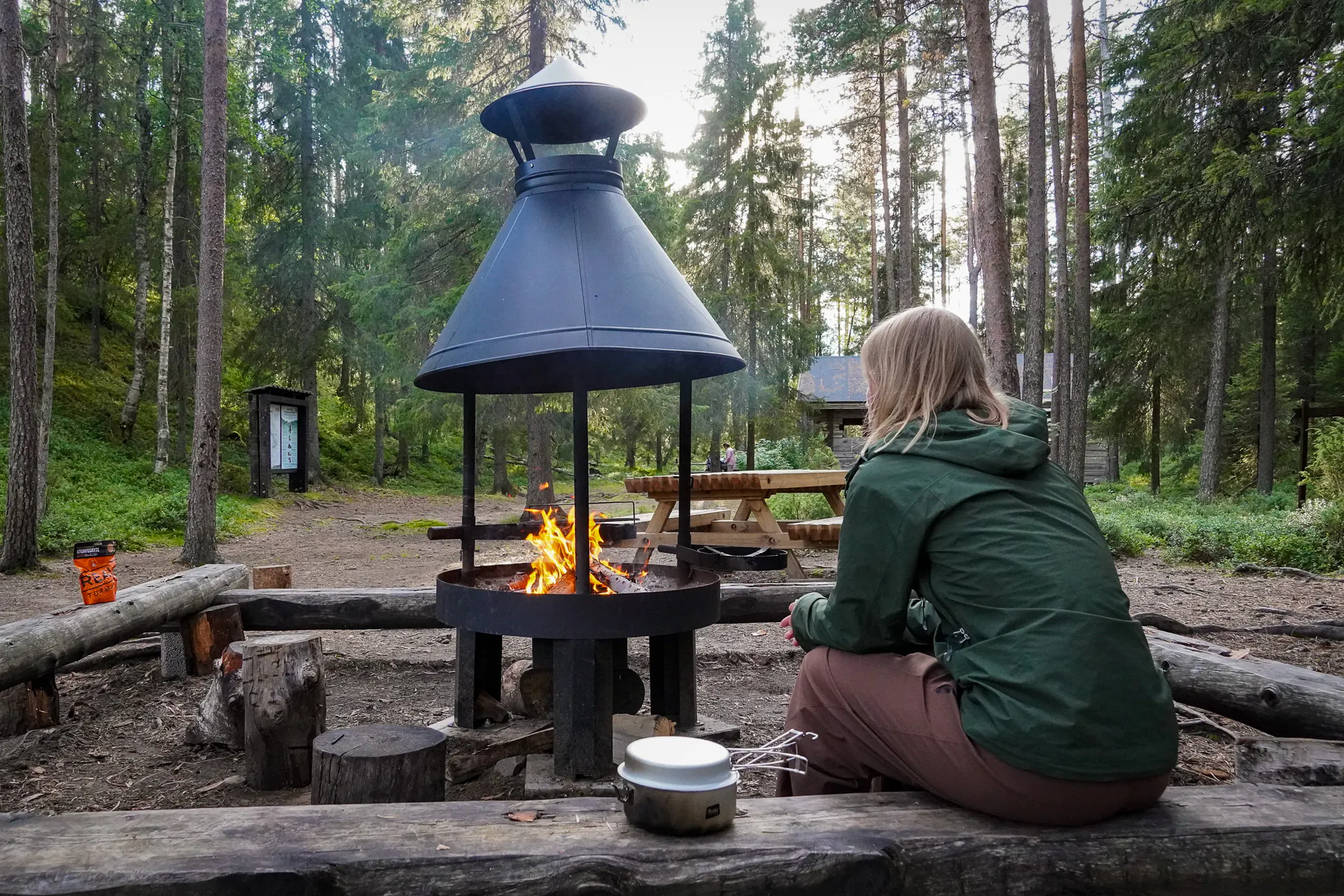
Open fires are generally allowed in Finland's nature, as long as there's no fire alert active for the area. Along the trails, you'll find dedicated fire pits with a safe setup, plus a wood shed stocked with logs and tools like a saw and an axe. These sheds are usually well maintained and restocked every winter and summer. It's good trail etiquette to cut a bit of extra wood for whoever comes after you.
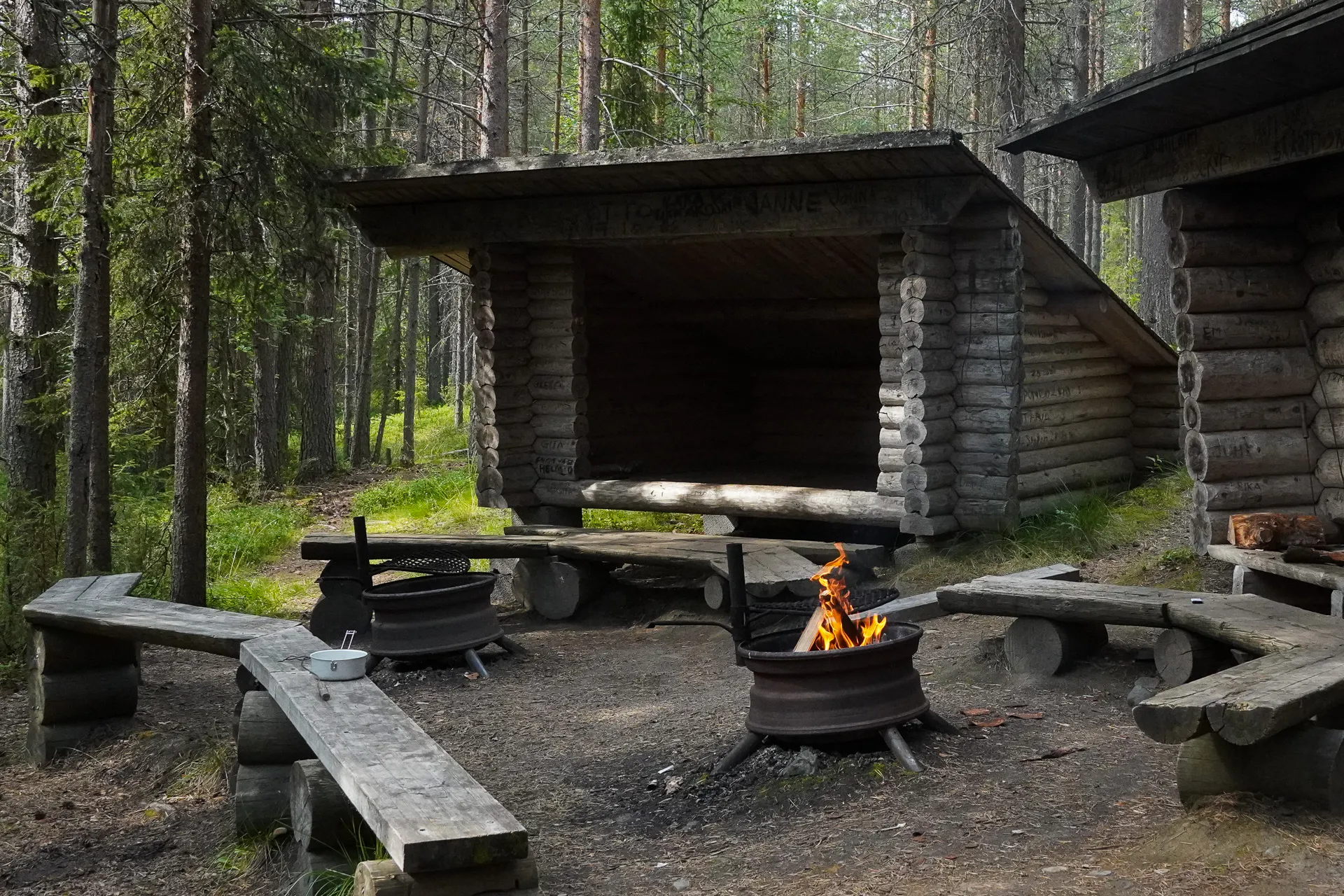
Laavu — the lean-to shelter
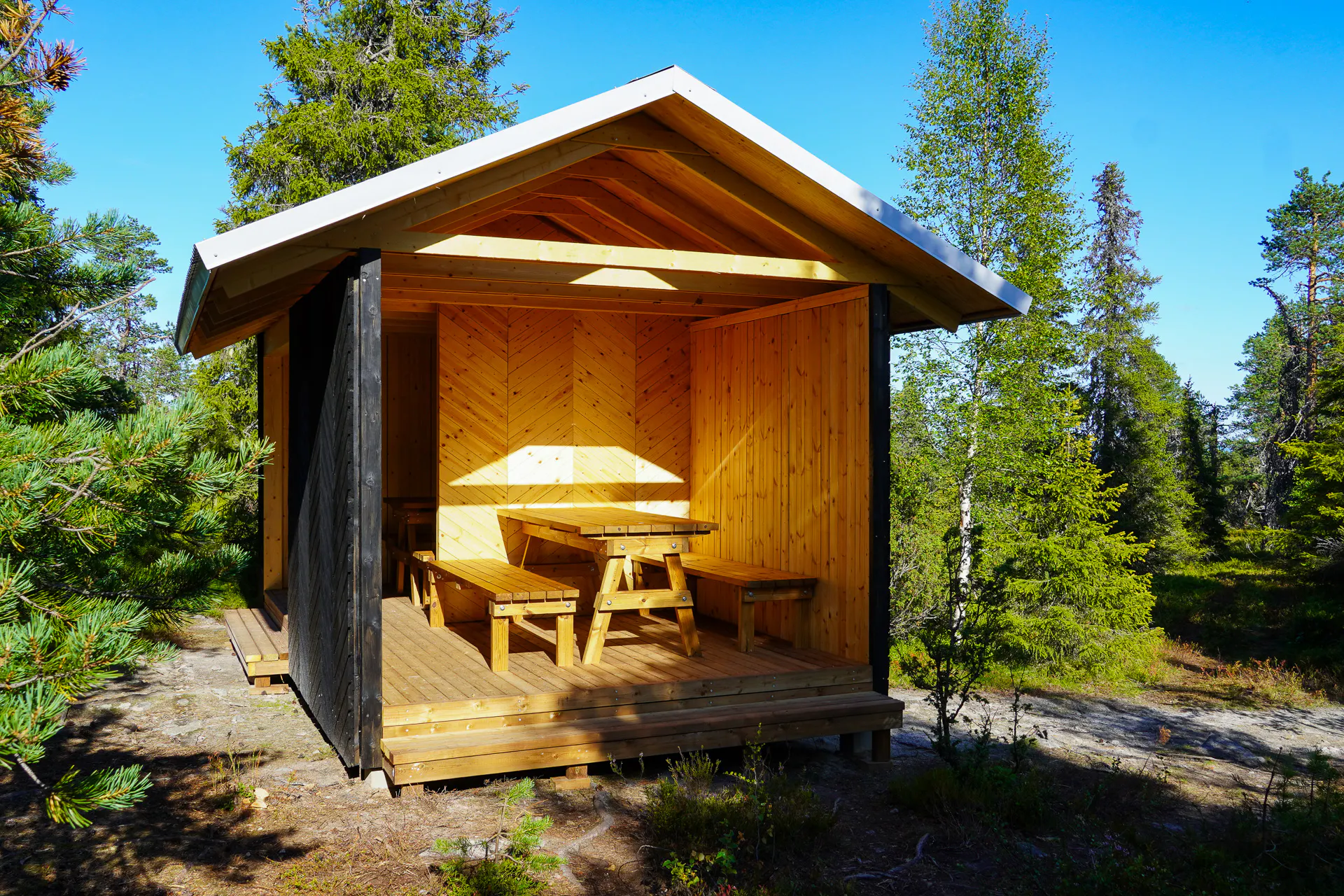
This might be the most common structure you'll come across hiking in Finland. A laavu is a semi-open, three-sided shelter, almost always paired with a fire pit right in front. Some have basic extras like sticks for cooking sausages over the fire. You can sleep in one if you need to, but keep the mosquitoes in mind, since it's open on one side, you won't get much protection from them.
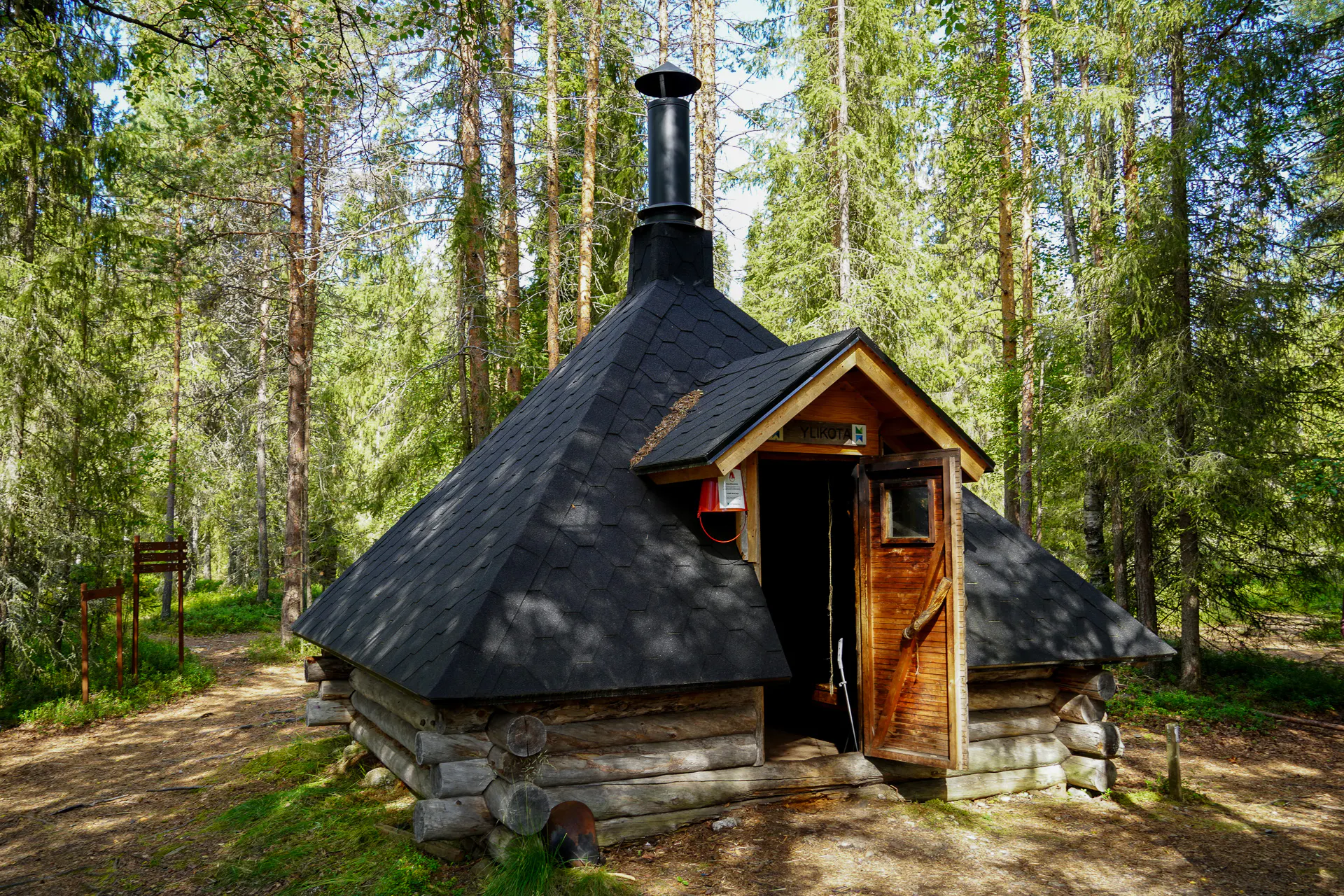
Kota — the closed fire place
A kota is especially useful in winter: a fully enclosed structure with seating arranged in a circle around a central fire pit, so you can warm up out of the wind. It comes from Sámi culture, shaped like a pole tent with an opening at the top for smoke to escape.
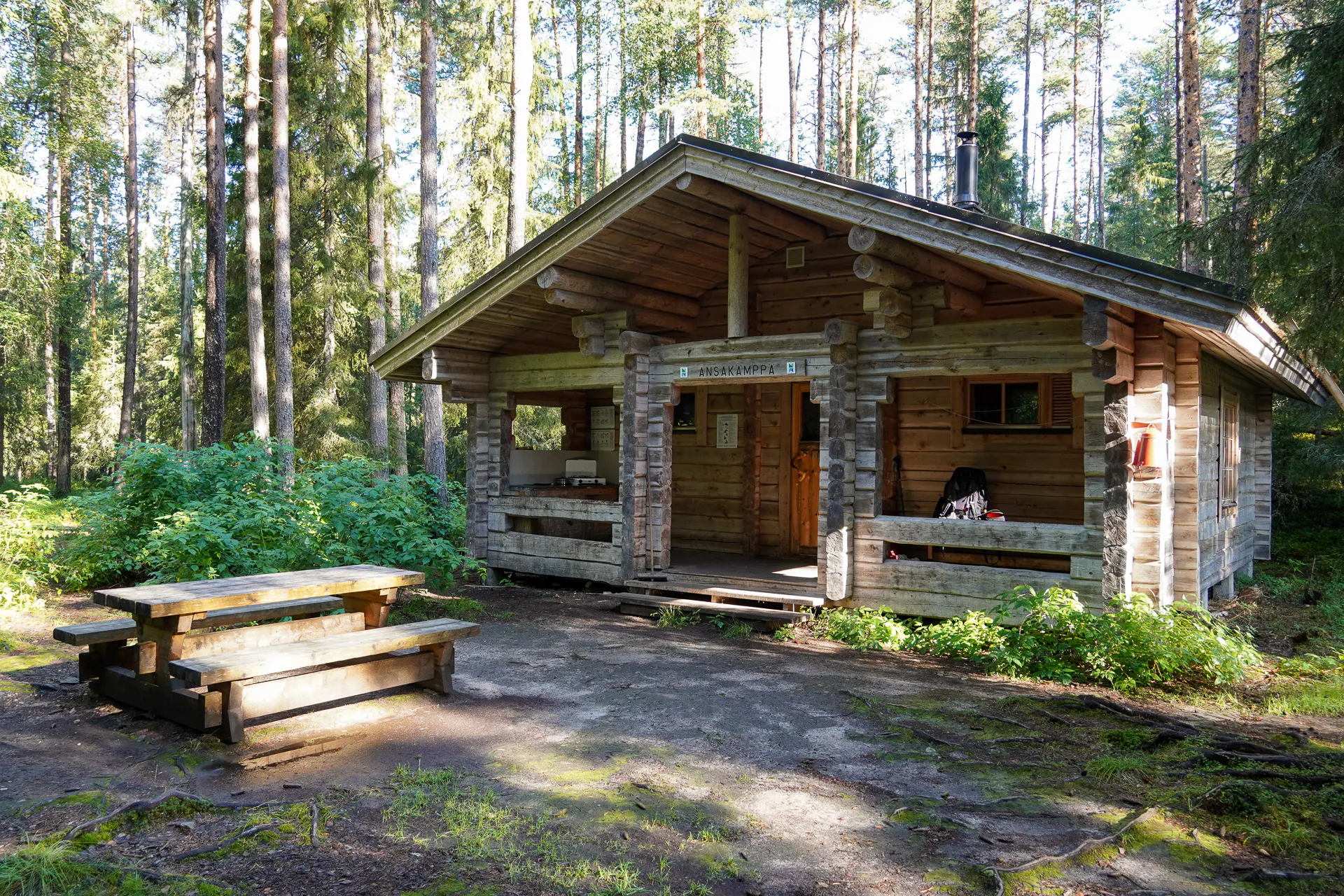
Autiotupa — the wilderness hut
This is the full package: a proper shelter with beds, tables, a stove, and often cooking equipment and gas you can use to prepare meals. Every autiotupa we've stayed in was in good condition, with room for anywhere from 10 to 20 people, one even had private double rooms.
There's no staff and no way to book ahead, so during summer these huts can fill up. Come prepared to pitch a tent or move on to the next spot if there's no space left, and remember the same two-night maximum applies here too.
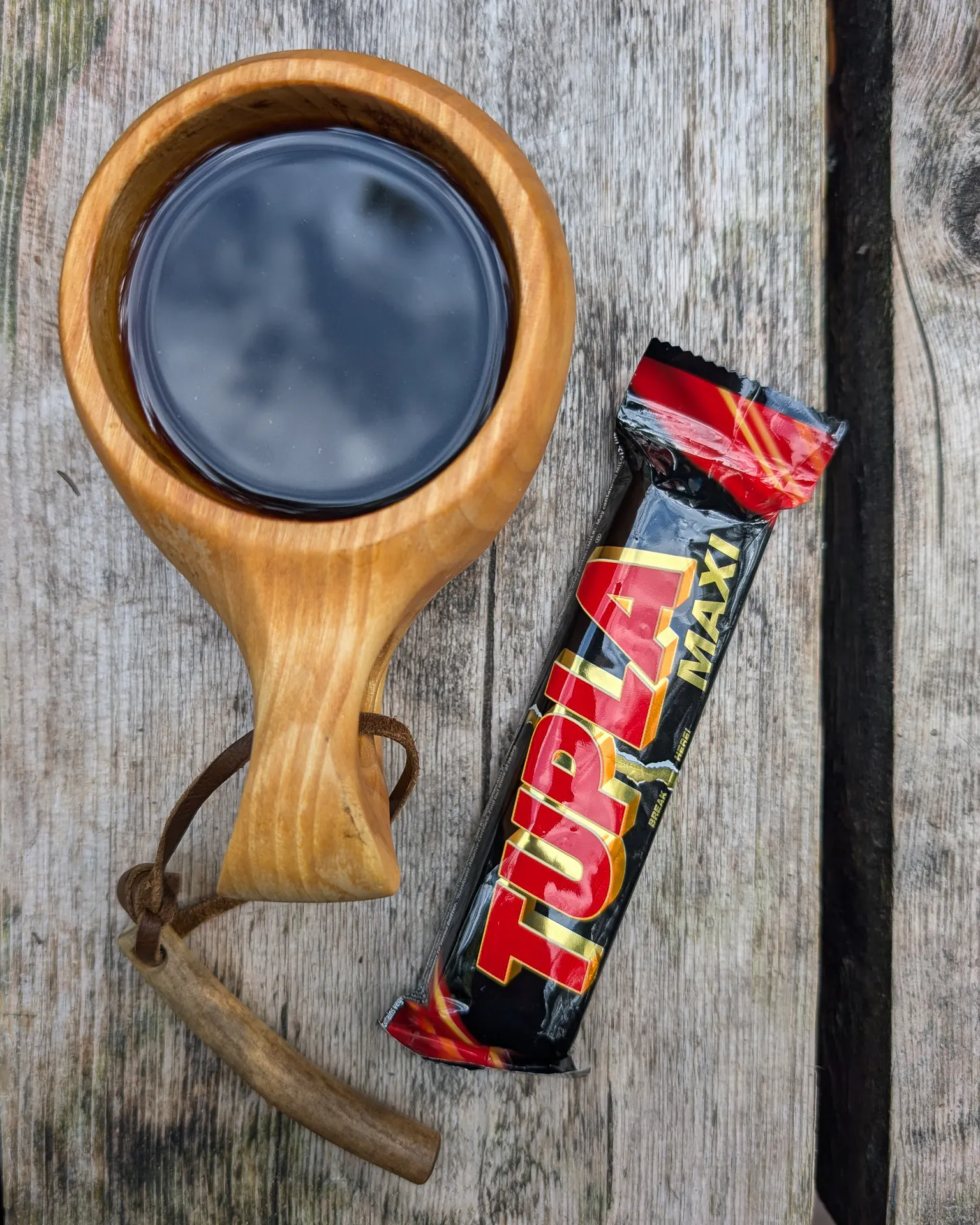
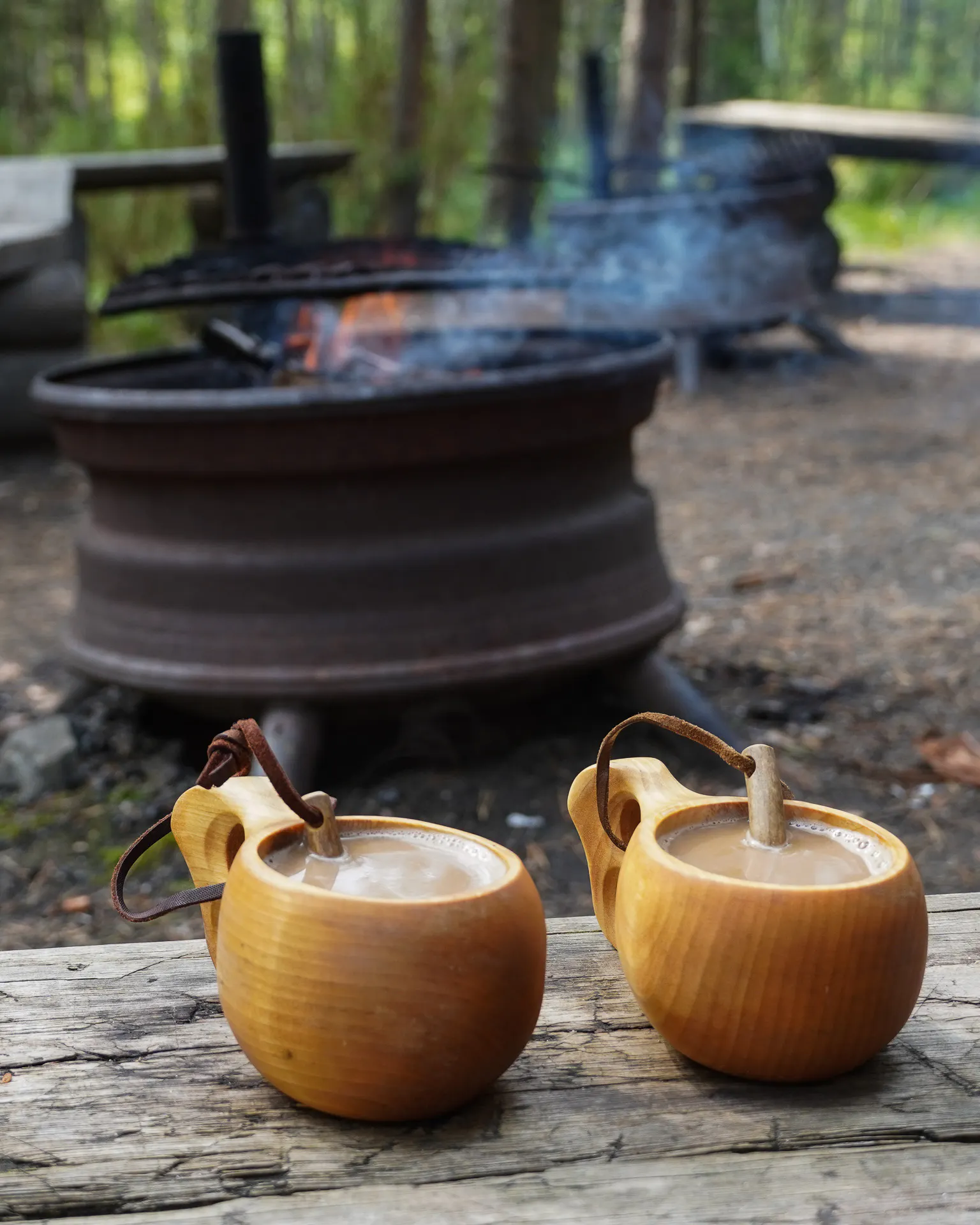
Kuksa — the Finnish camping cup
If you want to blend in like a local, get yourself a kuksa: a traditional cup carved from birch, originally from Sámi culture and now used by hikers all over Finland. Making one is part of duodji, the traditional Sámi handicraft tradition built around durable, functional, and good-looking everyday objects.
Tradition says you should either carve your own kuksa or receive one as a gift, but if carving isn't your thing, you can pick one up at almost any outdoor or souvenir shop.
A few things worth knowing
- Fire pits and wood sheds are shared resources — cut a bit extra for the next hiker, and don't take more wood than you need.
- Autiotupa huts can't be booked, so always have a backup plan (tent or a nearby laavu) for peak summer weekends.
- Mosquitoes can be brutal in summer, especially near lakes and in Lapland. Bring a repellent that actually works on Finnish mosquitoes, and consider a head net if you're sensitive to bites.
- The two-night rule applies everywhere you wild camp or use an autiotupa, not just in national parks.
- Picking berries and mushrooms is part of the right to roam, but don't take more than you'll actually eat, and be careful with mushrooms — if you don't know how to identify them, some are poisonous, so leave the ones you're unsure about alone.
- Bring some sausages to grill over the fire pits if you can. It sounds simple, but it's about as Finnish as it gets.
Finland might not have the mountains, but between the right to roam and the network of huts and shelters along its trails, it's one of the easiest places in Europe to plan a wild camping trip. After years hiking in the Alps and the Pyrenees, we found the quieter forests, lakes, and mild summer weather in Finland a genuinely refreshing change of pace.