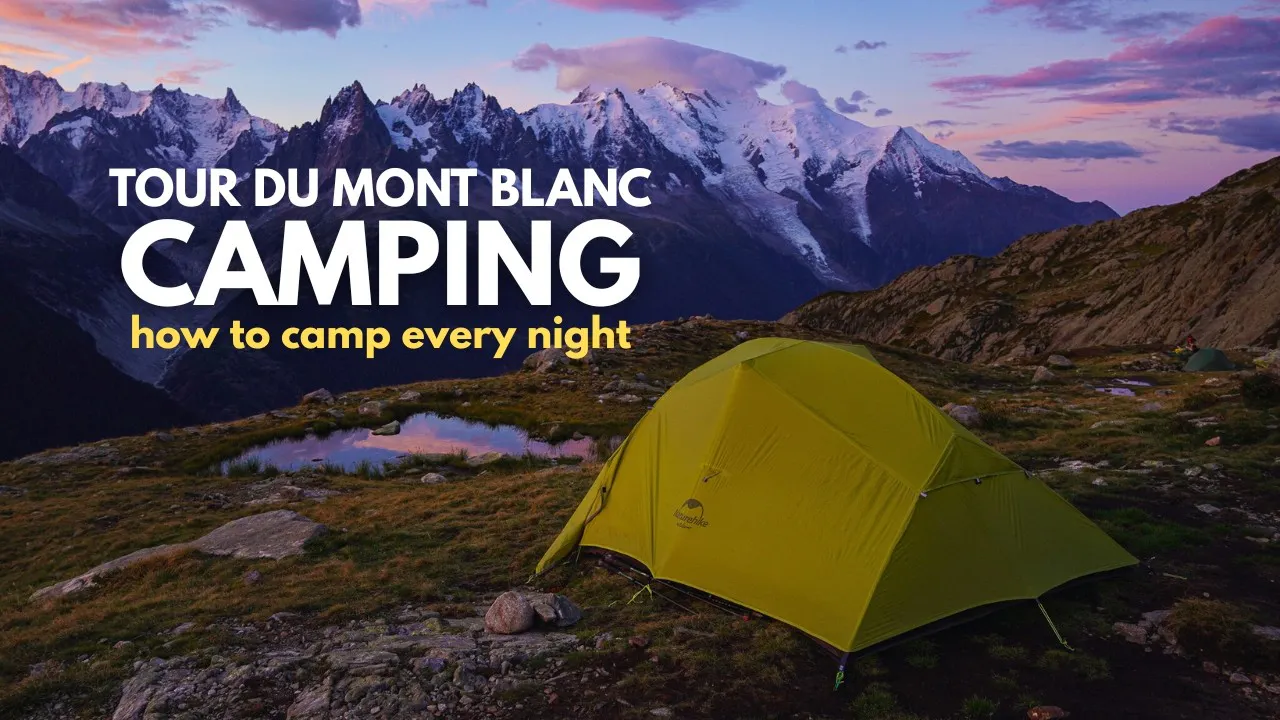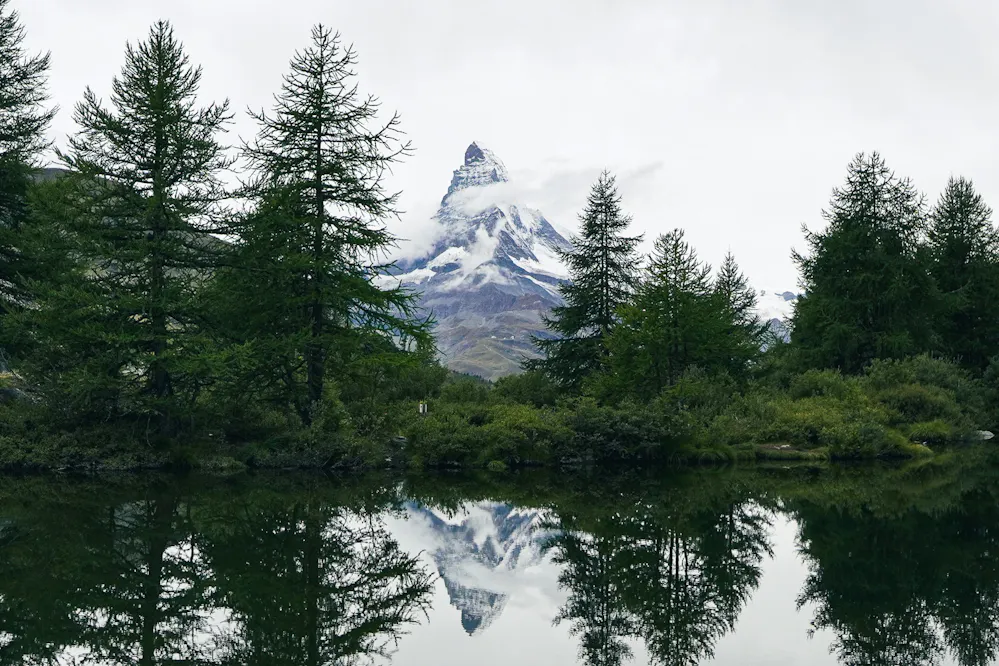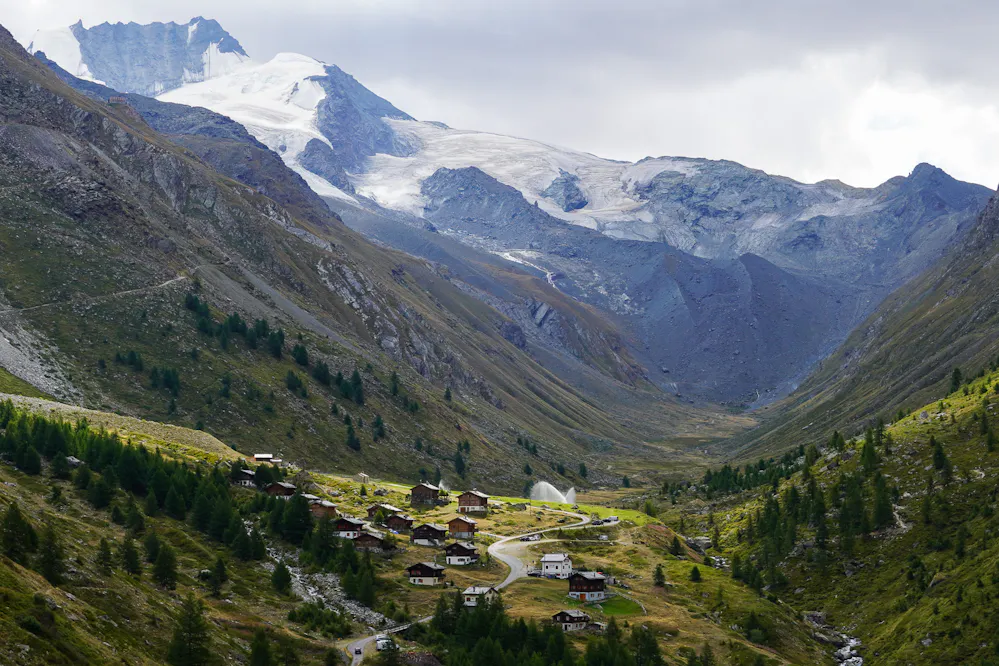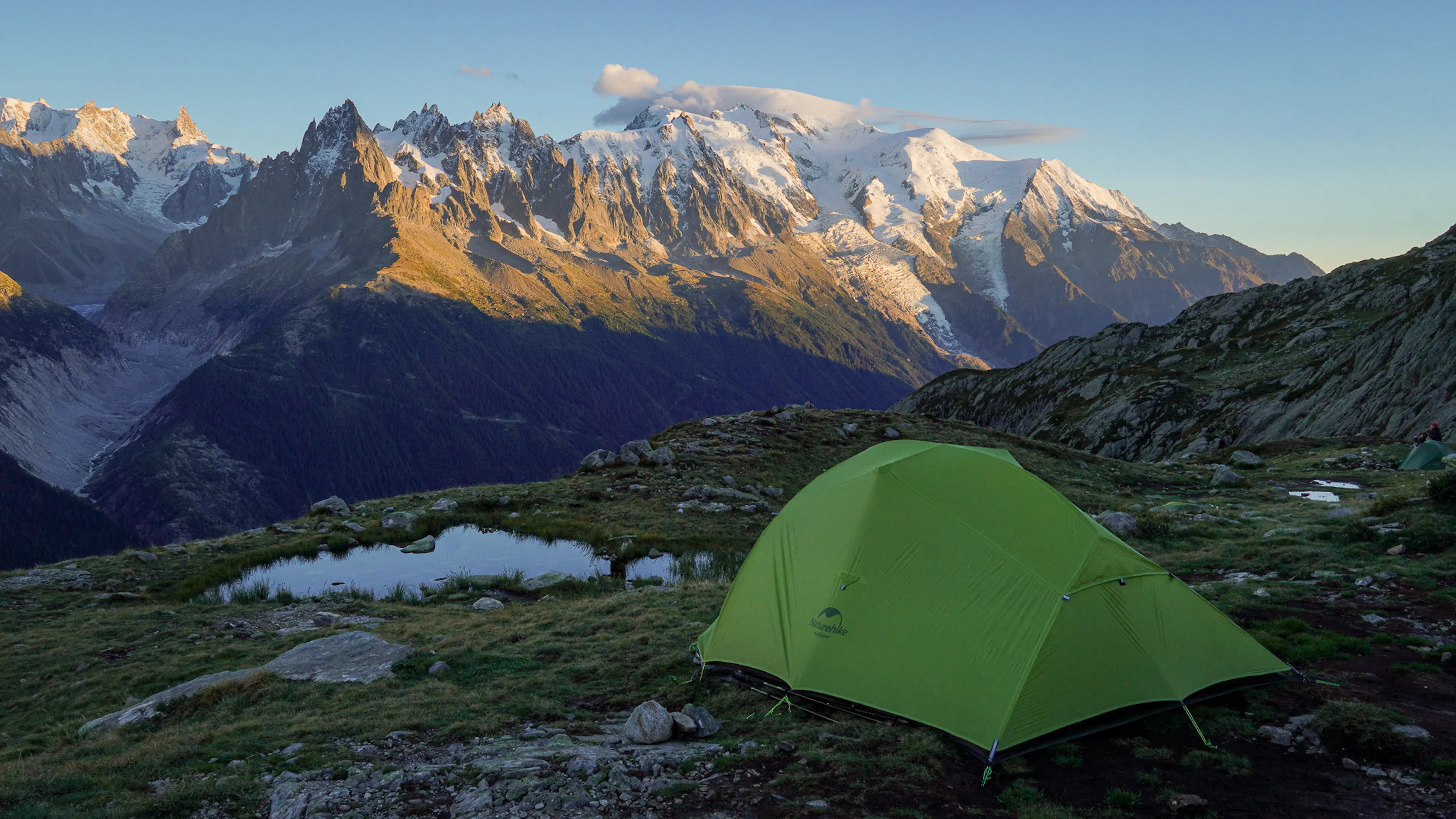
Completing the Tour du Mont Blanc by camping every night is completely possible, but the rules change depending on which country you're in, and the regulations keep getting stricter every year. We get asked about this constantly, so we decided to put together a full guide with all the official information organized by country, including the latest updates for 2026 season.
The short answer: France gives you the most flexibility, Italy has one narrow exception, and Switzerland is essentially prohibited.
Bivouac vs. Wild Camping: What's the Difference?
Before getting into the rules, it's worth clarifying the terminology, because the two terms aren't interchangeable, and in some places, the distinction matters legally.
Bivouac means a temporary camp set up from sunset to sunrise, for a maximum of one night in the same spot, leaving no trace. It can be under the stars or in a small tent.
Wild camping usually refers to camping outside of designated areas for more than one night, basically anything that goes beyond a quick overnight stop.
Along the TMB, when we talk about what's "allowed," we almost always mean bivouac. True multi-night wild camping is prohibited throughout the entire route.
Switzerland: the most restricted section
The Swiss section of the TMB crosses two communes, and both have a formal prohibition on wild camping and bivouacking. The only exception is for emergency situations and above the tree line.
In practice, if you're following the official route through Swiss Val Ferret and Champex-Lac, there's no realistic option to sleep in the wild. It's the most restricted section of the entire trail.
The good news is that the campsite options are solid:
- Swiss Val Ferret: Camping des Glaciers in La Fouly
- Champex-Lac: Camping Les Rocailles, Camping Gîte Bon Abri, Camping du Relais d'Arpette
- Trient: Camping Le Peuty
The communes take it seriously, and it's a short section, just book the campsites and move on.
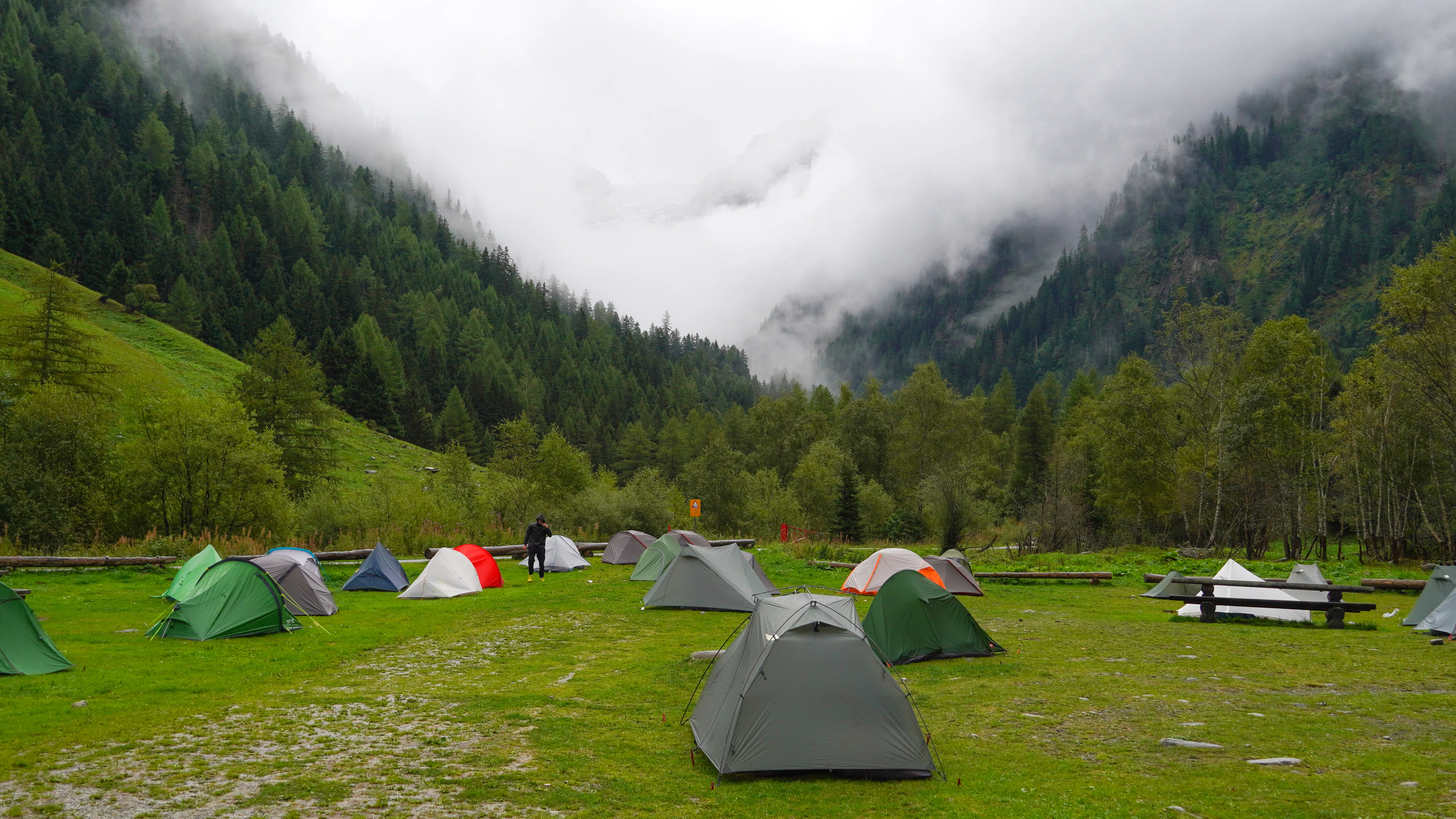
Campsite in Trient, Switzerland
Italy: restricted with one exception
The Italian side covers two valleys: Val Veny and Val Ferret. In both, wild camping is prohibited. The only exception is above 2,500m, which on the standard TMB route, only happens once: at the Gran Col Ferret, right on the border with Switzerland.
That's a very small window. For most of the Italian section, your options are huts or campsites.
There are a handful of campgrounds in each valley:
- Val Veny: Camping Aiguille Noire, Campeggio Monte Bianco La Sorgente, Camping Hobo
- Val Ferret: Camping Grandes Jorasses, Camping Tronchey
Bear in mind that none of these campsites are directly on the route, you'll need to take a detour and descend to the valley floor to reach them. The Italian huts are located in beautiful places with fantastic views, so if you were planning on a hut night anywhere, the Italian side is a great place to do it.
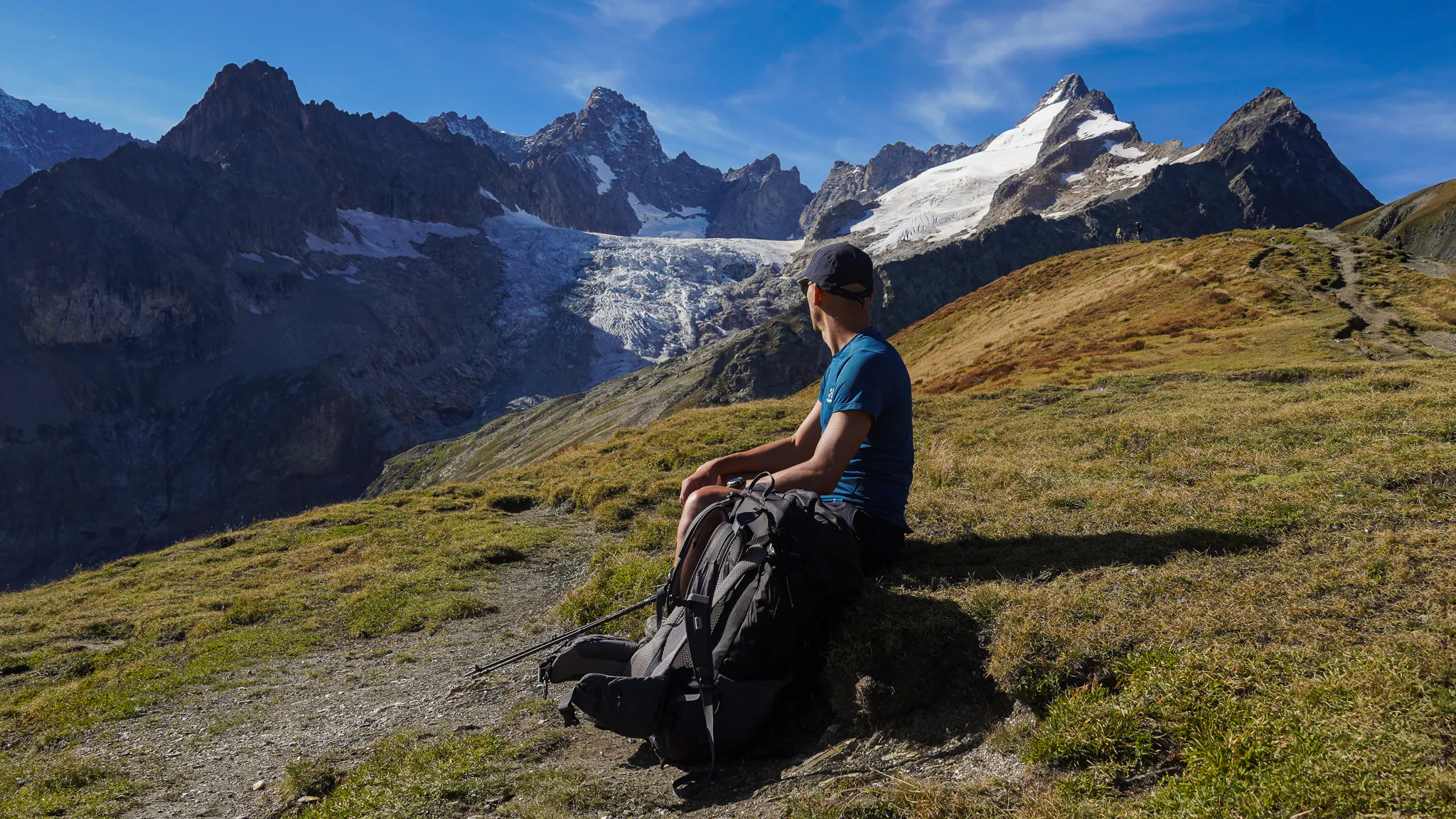
Gran Col Ferret, Italian border with Switzerland
France: where camping really shines
France is by far the most flexible country on the TMB for camping, and it's where things get interesting. The general rule is that bivouacking is tolerated from sunset to sunrise, for one night only, outside of private land and high-altitude agricultural areas. But it varies significantly from region to region, and much of the route passes through protected areas or private land, which limits your options even here.
That said, there are a few designated free bivouac areas on the French side. These are official spots, most with toilets. Between June 15 and September 15, reservation is mandatory, outside of that window, you can show up without booking.
Aiguilles Rouges
This is one of the most beautiful sections of the entire TMB, and there are two designated bivouac areas here: Col de Bellachat / Lac du Brévent and Les Chéserys. Sleeping at either of these is a genuinely special experience. Reservations website: reserve-bivouac74.fr
Les Contamines-Montjoie
This section had a significant update for the 2026 season. Camping is now strictly prohibited below 2,500m, with two exceptions: the designated areas at La Giettaz / Pont de la Rollaz and La Balme. There's also a new free campsite just outside the protected area, at Parc de Loisirs — a large space that fits up to 150 tents. Reservations website: reserve-bivouac74.fr
Bourg-Saint-Maurice / Les Chapieux
In this municipality, there's a free bivouac area at Les Chapieux, with toilets included, and they ask for a small donation if you're able. Note that the entire Vallée des Glaciers consists of mountain pastures and private property, so bivouacking outside of the designated spot is not permitted.
Campsites on the French side
Beyond the bivouac areas, there are plenty of campsites throughout the French section of the route. It's entirely possible to do the whole French side by camping, either at official campsites or using the designated bivouac spots.
Some options by location:
- Les Houches: Camping Bellevue
- Les Contamines: Camping du Pontet
- Col de la Forclaz: Camping de l'Arpille
- Vallorcine: Camping des Montets
- Argentière / Chamonix: Plenty of options in the valley
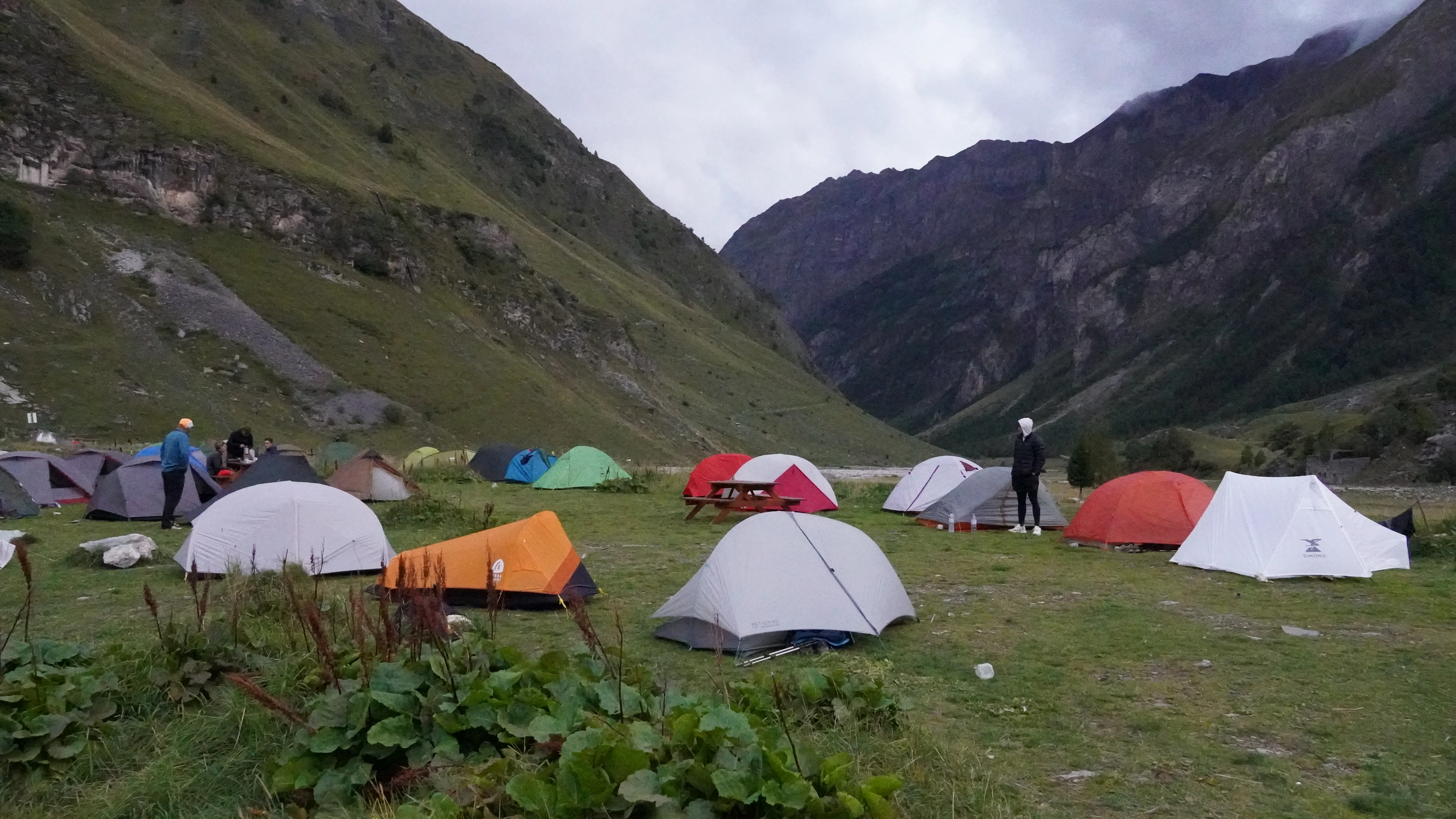
Les Chapieux Bivouac area
Plan your camping strategy before you go
The TMB is totally doable as a camping trip, even on a budget, if you plan ahead. The key is knowing which nights you can sleep in the wild and which ones require a campsite booking. If you want help mapping out your stages and accommodation options, check out our Hike Planner tool, where you will find all the huts, campgrounds and bivouac spots mapped along the route.
Discover our Hike Planner
Create your perfect itinerary with our Hike Planner
Plan your long-distance hike stage by stage, with trail data verified by us on every route. All in one place.
- Curated hike data with official routes, variants, and more
- Design your hike stage by stage
- Find huts with real-time availability
- Download GPX files for your favorite navigation app
- Generate a printable PDF for your hike
Why the rules are getting stricter
The TMB keeps getting more popular every year, and with more hikers comes more impact on the terrain, water sources, and wildlife. The new restrictions in places like Les Contamines-Montjoie are a direct response to the damage caused by unregulated camping in protected areas.
We think the designated bivouac system is actually a good model — free spots, with basic facilities, concentrated impact in areas that can handle it. It's much better than banning everything, and it keeps the freedom of sleeping outside accessible to people who can't afford huts every night.
But it only works if everyone follows the rules. The more people ignore the boundaries, the more likely it is that future regulations will be even stricter, or that the designated areas will start charging fees.
Leave No Trace
Wherever you camp along the TMB, a few things apply everywhere:
- No fires — this applies throughout the entire route, even where bivouacking is allowed
- No swimming in alpine lakes — the ecosystems are fragile and take a long time to recover
- Pack out everything — including organic waste like fruit peels and tea bags
- Ecological toilet practice — go at least 60 metres from any water source, bury waste, pack out paper
- Don't pick flowers or mark rocks — it seems obvious, but we still see it
Before heading to the trail, consider taking a moment to read more about the 7 Leave No Trace Principles.
If you're planning to camp the TMB and want to go deeper on what to carry, how to plan meals, and how to manage the logistics, we put together a full video guide: Complete Guide to Camping on the Tour du Mont Blanc