Long-distance trails almost always cross protected areas, and every one of them has its own rules. Wild camping can be banned in one national park and allowed in the next. Fires, drones, dogs and even swimming can be restricted, and some areas need a permit just to enter. Until now, we had to look up these protected areas hiking rules park by park, often on websites in a language we don't speak.
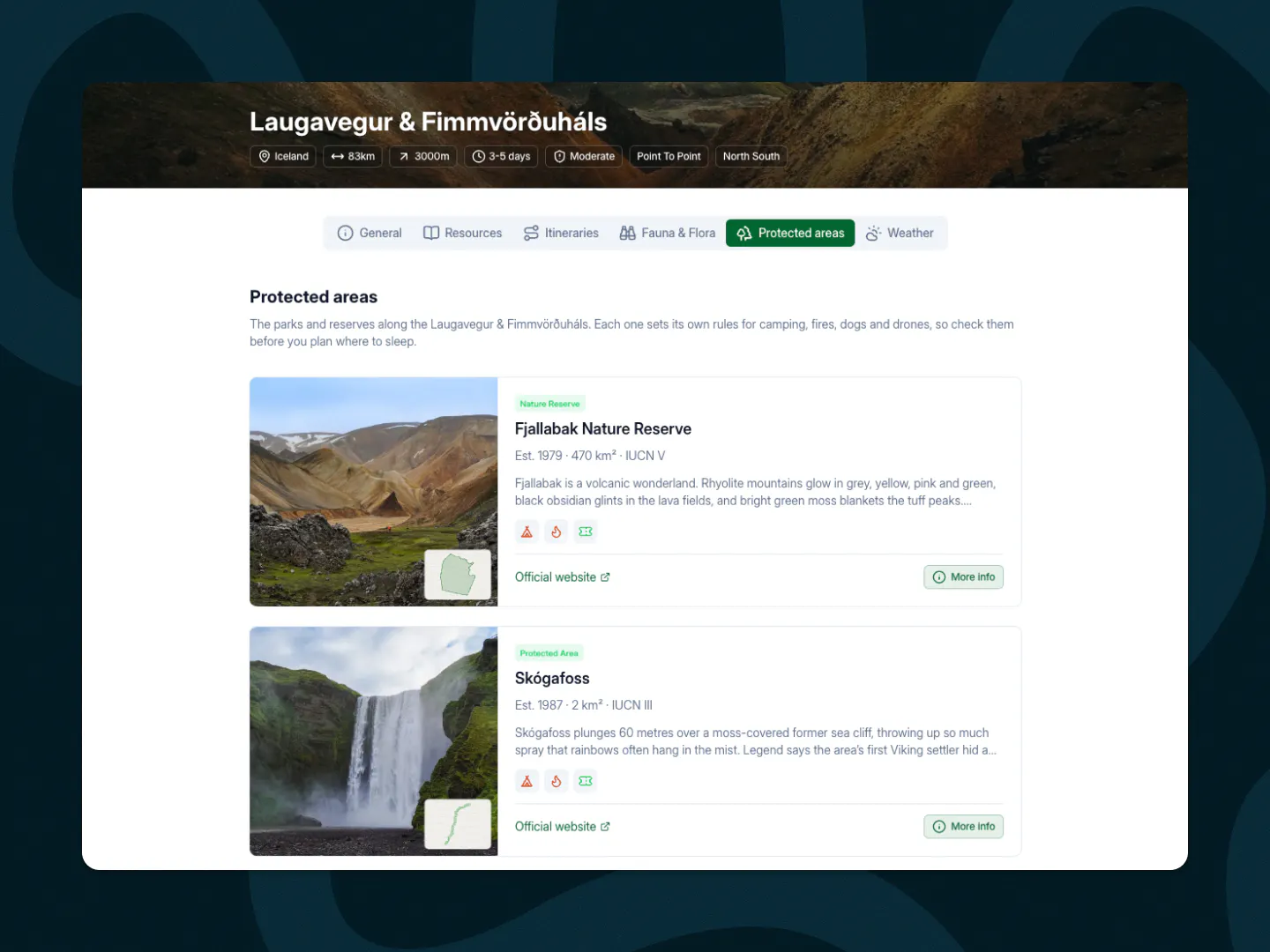
So we added it to the Hike Planner. The new Protected Areas feature shows every park on your route and the rules that go with it, right next to your itinerary. Here is what it does and how we use it.
Why does it matter?
Knowing the rules before you leave means no surprises on the trail. It is much better to find out at home that wild camping is banned in a park than to find out at 6pm, tired, with the tent in your backpack. And in many places, ignoring the rules means a fine.
There is also a bigger reason. Since covid, more people are hiking, and some routes get more hikers every year. This puts real pressure on the trails, the campsites and the nature around them. The local authorities see it, and in many places they are answering with stricter rules. The Tour du Mont Blanc is a good example: bivouacking is getting more and more restricted there. What was allowed a few years ago might not be allowed today, so an old blog post or a friend's tip is not enough anymore.
We believe it is important to bring awareness about the fragile ecosystems we walk through. Alpine meadows, wetlands and nesting areas do not recover quickly from too many people. If we follow the rules, other hikers can keep enjoying these places in the future. That is the main reason we built this feature.
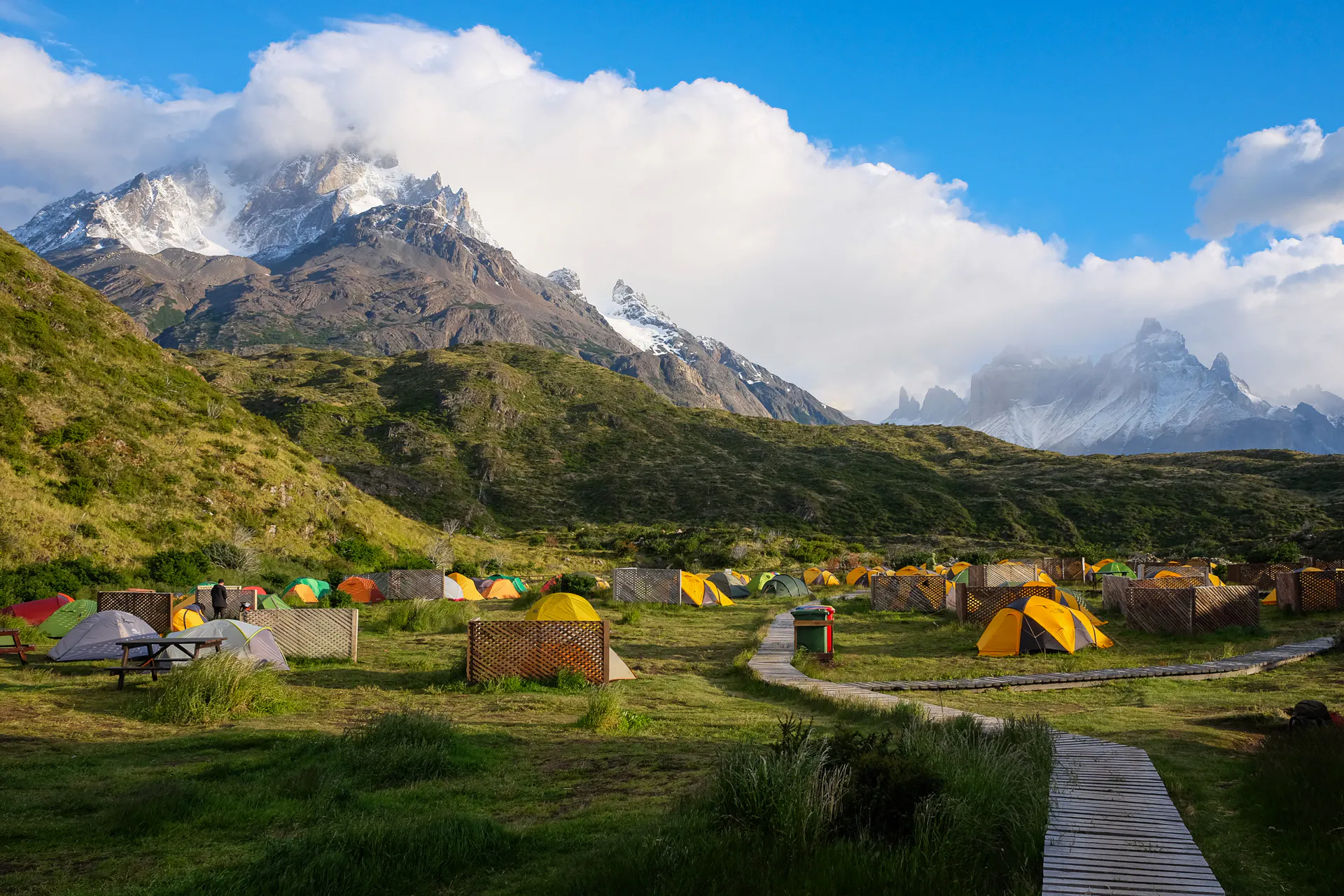
A campsite in Torres del Paine National Park
How does it work?
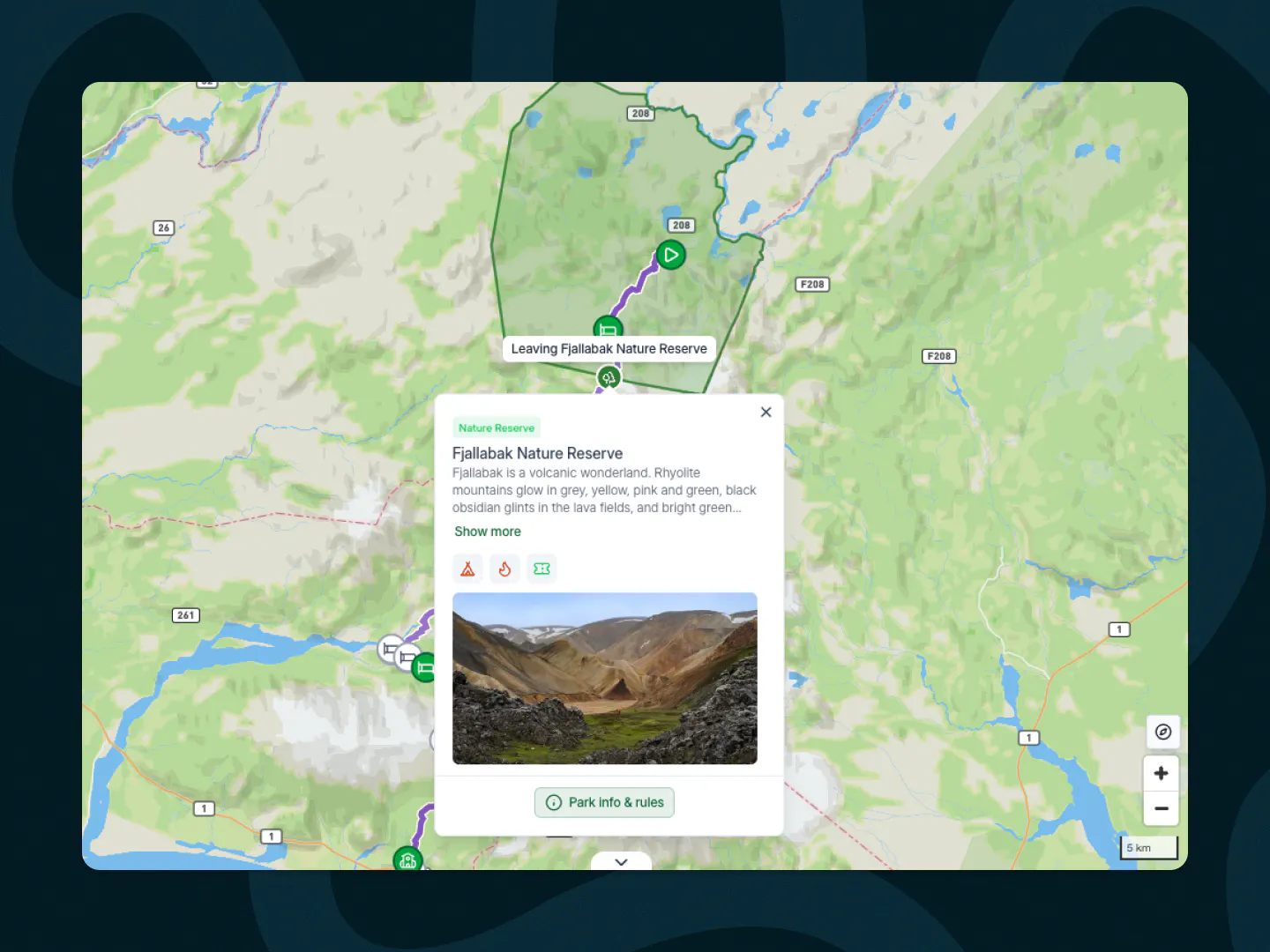
In the Hike Planner, the protected areas are shown on the map. We also mark the points where your stages enter and leave a protected area, so you can see exactly which part of your itinerary is inside a national park (or a natural park, or a nature reserve) and which part is not.
Click on an area and you get more information about it:
- Quick facts: the year it was established, its size, its IUCN category and its designations, such as UNESCO Biosphere Reserve or Natura 2000.
- The official website of the park where you can find more information and go deeper on the rules and restrictions.
- Quick rules for what matters most to hikers: permits, wild camping, swimming, fires and dogs restrictions. A simple icon shows if each one is allowed, restricted, needs a permit or is prohibited.
If you want the full picture, you can open all the rules of the park for a complete investigation. The summary is good for planning, but for a park where you will sleep, we recommend reading everything.
For routes that happen entirely inside a park, we add a disclaimer: the rules apply during the whole route, not only on some stages. Those are the hikes where it is most important to read the rules before you go.
We keep it updated
Rules are only useful if they are correct. We carefully go through the pages of each national park to find all the rules, and we also look for documents published by the local authorities, where the regulations are written in full. We will keep checking for changes that may affect hiking, and we will update the planner when something changes.
The feature is available for all hikes and for users who unlocked the planner. You will also find a new tab on the hike detail page, with all the protected areas along the route.
Discover our Hike Planner
Create your perfect itinerary with our Hike Planner
Plan your long-distance hike stage by stage, with trail data verified by us on every route. All in one place.
- Curated hike data with official routes, variants, and more
- Design your hike stage by stage
- Find huts with real-time availability
- Download GPX files for your favorite navigation app
- Generate a printable PDF for your hike
And one more thing: even outside of the protected areas, we should still always follow the Leave No Trace principles. A route does not need a park border to deserve respect. Pack out your trash, camp on durable ground, and leave the place as you found it. Open your next route in the Hike Planner and see which protected areas you will cross.